
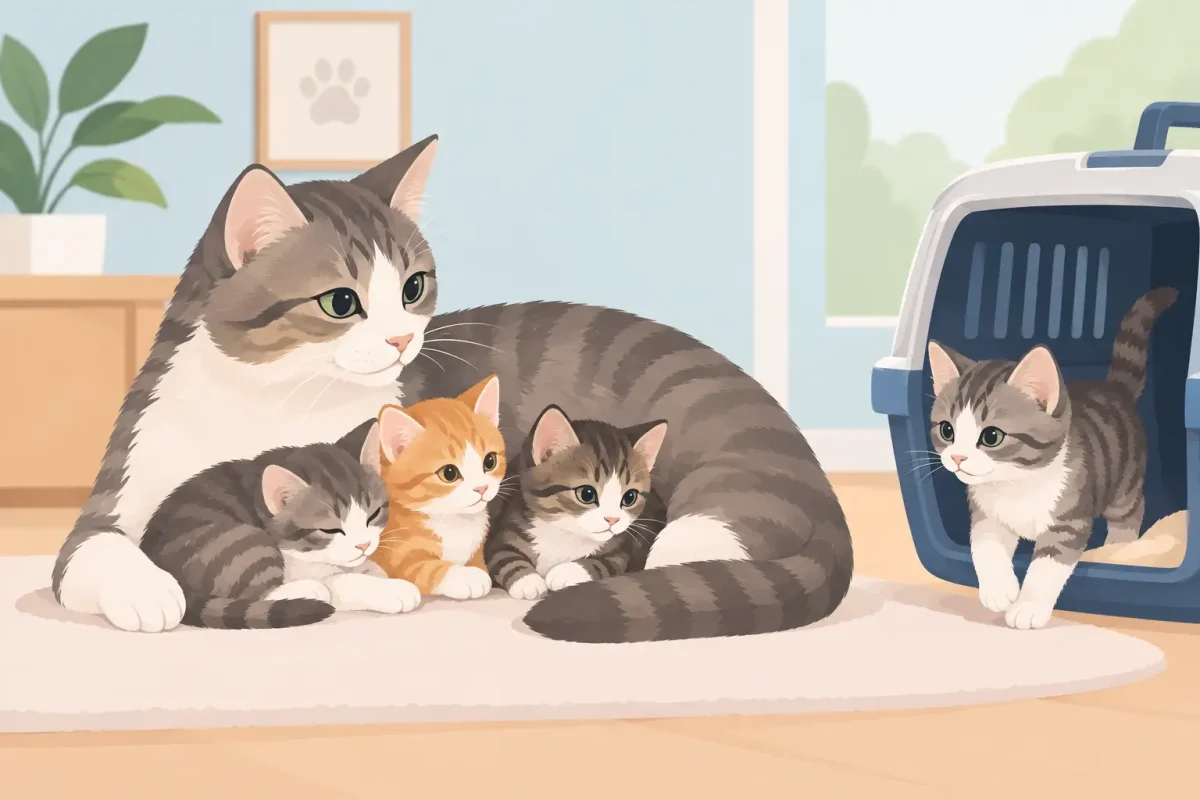
A kitten may look ready for a new home long before she is truly ready to leave her family. When can kittens leave mother? For most well-raised pedigree kittens, the healthiest answer is usually between 12 and 14 weeks old. That extra time is not simply a waiting period. It is when a kitten learns the steady, everyday skills that help her arrive as a secure, affectionate companion instead of feeling overwhelmed by a big change.
For families waiting excitedly to bring home a Maine Coon or Ragdoll, those last few weeks can feel long. Yet they are often where much of a kitten’s calm joy, social confidence, and ability to settle into family life begins.
When Can Kittens Leave Mother Safely?
Kittens should remain with their mother and littermates until they are fully weaned, consistently using the litter box, eating well on their own, gaining weight appropriately, and showing the emotional confidence to handle normal household life. While eight weeks is sometimes treated as a minimum in certain settings, minimum is not the same as ideal.
At Maine Coon And Ragdoll House, we believe a kitten’s readiness should be observed as an individual process. Age matters, but so do the kitten’s habits, personality, health, and comfort with people. A bright, playful kitten who still needs reassurance from mom or struggles with change benefits from more time in the familiar rhythm of the home.
For many Maine Coon and Ragdoll kittens, 12 to 14 weeks offers a thoughtful balance. By then, they have had more time to practice independence while still receiving the security and gentle correction that only a mother cat and littermates can provide.
Why the Extra Weeks Matter
A mother cat does more than feed her kittens. She teaches them how to be cats. Through quiet, repeated interactions, kittens learn when play has become too rough, how to read another cat’s signals, how to groom themselves, and how to settle after excitement. Littermates are equally valuable teachers. They help one another develop bite inhibition, confidence, and appropriate play manners.
Human handling during this same period shapes a kitten’s relationship with people. A kitten raised in an active family home can become familiar with normal sounds, gentle touch, visitors, feeding routines, brushing, and respectful play. This does not mean every kitten will have the same personality. Some will be outgoing and eager to greet everyone, while others will be tenderhearted observers who warm up at their own pace. Early, kind exposure helps each kitten feel safer being herself.
Leaving too early can make the transition harder. An early-separated kitten may be more likely to have trouble with biting during play, litter box inconsistency, anxiety, or difficulty settling alone. These concerns are not guaranteed, and loving homes can help kittens thrive, but there is no advantage in rushing a developmental stage that supports lifelong security.
Weaned Is Not Always Ready
Families sometimes hear that a kitten is eating solid food at six or seven weeks and assume she can go home. Weaning is a major milestone, but it is only one part of readiness.
A kitten who is weaned can eat without nursing. A kitten who is ready for a new family can eat independently, use the litter box reliably, accept handling, recover calmly from ordinary household activity, play appropriately, and rest comfortably away from mom for periods of time. She should also be growing well and have received age-appropriate veterinary care guided by her veterinarian.
This distinction matters because a kitten’s body and behavior develop on different schedules. The weeks after weaning give breeders time to notice small but meaningful details: who needs a little more encouragement at mealtime, who confidently explores new spaces, who loves being held, and who would be happiest in a quieter home or with a feline friend.
Maine Coons and Ragdolls Benefit From a Thoughtful Timeline
Both Maine Coons and Ragdolls are known for big hearts and affectionate potential, but they are not identical in how they approach the world.
Maine Coon kittens are often curious, playful, and wonderfully engaged with household activity. Their larger size and energetic play style make those early lessons with mom and littermates especially useful. They need time to learn gentle play, everyday boundaries, and how to channel that bright curiosity without becoming overstimulated.
Ragdoll kittens are often soft-natured, people-oriented, and drawn to close connection. Their trusting personalities deserve careful protection. Extra time in a stable, loving environment can help them build the confidence to adjust to a new family, a new routine, and the sounds of a different home without feeling rushed.
Of course, breed tendencies are only part of the picture. A good match considers the individual kitten as well as the household. A busy family with children, a remote worker seeking a close companion, or a home with a friendly dog may each be best suited to a different kitten within the same litter.
What Responsible Breeders Look For Before Placement
A careful breeder does not choose a go-home date based only on a calendar. Before a kitten leaves, they should be watching for steady growth, healthy appetite, dependable litter habits, and a comfortable response to daily handling. They should also be open about the kitten’s veterinary care, feeding routine, personality, and any needs that may affect the transition.
The best timing may vary slightly within a litter. One kitten may be ready at 12 weeks, while a smaller or more sensitive sibling is better served by another week or two with mom. This is not a setback. It is individual care in action.
Families should feel comfortable asking direct questions: How is the kitten eating? What litter is she using? Has she been around children, other cats, or dogs? Does she seek attention, or does she take a little time to warm up? Honest answers make it easier to prepare for the kitten in front of you, rather than an imagined version based on color or photographs alone.
Bringing Home a Kitten at the Right Time
Even a confident 12- to 14-week-old kitten needs a gentle landing. Prepare one quiet room or contained area with the same type of food and litter she knows, fresh water, a cozy bed, a scratching surface, and a safe place to hide. Let her set the pace for exploring. Some kittens stroll out of the carrier ready to inspect every corner; others need a day or two to watch, listen, and decide that this new place is theirs.
Keep the first few days simple. Avoid a parade of visitors, loud gatherings, or immediate introductions to resident pets. If children are excited, show them how to sit quietly nearby and let the kitten come to them. Calm, patient contact builds more trust than constant attention ever could.
For homes with another cat or dog, introductions should be gradual. Start with scent exchange and brief, supervised encounters rather than expecting instant friendship. A kitten who had proper time with her mother and littermates often has a stronger foundation for reading social signals, but every resident pet deserves time to adjust as well.
If a Kitten Must Leave Mother Early
There are rare situations when a kitten cannot remain with her mother, such as illness, rejection, or the loss of the mother cat. In those cases, experienced foster care and veterinary guidance are essential. Very young kittens may need bottle-feeding, warmth, help with elimination, frequent weight checks, and carefully managed socialization with appropriate feline companions when possible.
An orphaned or early-separated kitten can grow into a loving family cat, especially with attentive care. Still, this is a situation to manage carefully, not a reason to treat early placement as routine. The goal remains the same: give the kitten the nutrition, safety, social learning, and reassurance she would normally receive from mom and littermates.
A Little More Time Is a Gift
The right go-home age is not about making families wait for the sake of it. It is about sending a well-loved kitten into her next chapter with a fuller sense of safety and belonging. Those extra weeks with mom, littermates, and a caring home routine can make the first night in your home feel less like a frightening separation and more like the beginning of a trusted new family.
