
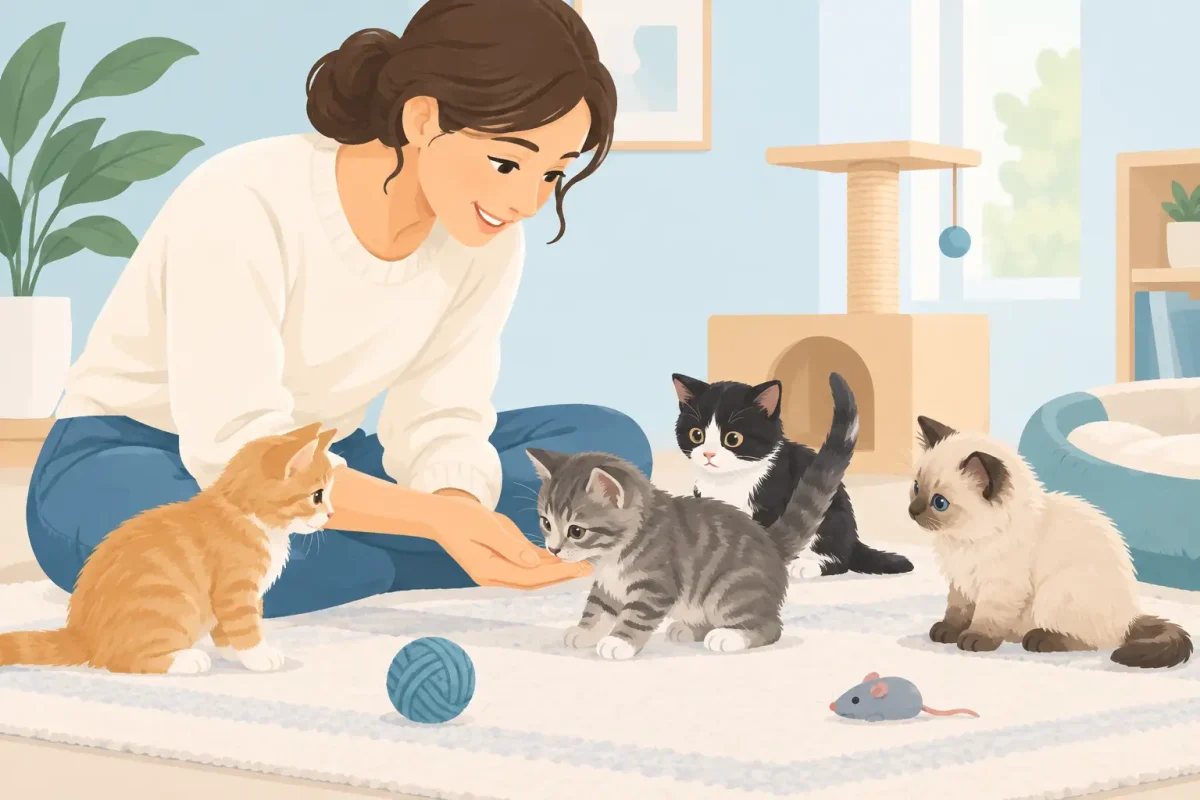
A kitten who has calmly heard the vacuum, felt kind hands, napped near everyday conversation, and learned that people bring comfort has a different starting point than one raised with little human contact. What is early kitten socialization? It is the thoughtful, gradual process of helping a young kitten feel safe with people, normal household life, gentle handling, and new experiences during the first weeks of life.
For families choosing a Maine Coon or Ragdoll, this matters far beyond whether a kitten looks relaxed in a photo. Early experiences can shape how comfortably a kitten settles into a new home, accepts affection, responds to visitors, and adjusts to the normal rhythm of family life. Socialization is not about creating a kitten who loves every person or never feels cautious. It is about building a secure foundation so the kitten can meet the world with curiosity rather than fear.
What Is Early Kitten Socialization and When Does It Begin?
Early kitten socialization begins almost immediately, although the approach changes as kittens grow. In the earliest days, a calm mother cat, clean nest, consistent feeding, and gentle care help kittens associate human presence with safety. As their eyes open and they become more aware of their surroundings, brief, respectful handling becomes part of their daily routine.
The most sensitive learning period is generally from about two to seven weeks old, with meaningful development continuing well beyond that point. During these weeks, kittens are learning what is familiar, what feels safe, and how to recover after something new happens. A well-raised kitten is not pushed through a parade of overwhelming experiences. Instead, the people caring for the litter introduce everyday life in small, positive pieces.
That distinction matters. Too much noise, handling, or novelty before a kitten is ready can create stress. Too little exposure can leave a kitten more easily startled when it eventually enters a busy home. The goal is steady confidence, not constant stimulation.
Socialization Is More Than Being Held
People often picture socialization as cuddling a kitten, and affectionate handling is certainly part of it. But a kitten’s social world is much broader. It includes the sights, sounds, textures, routines, and relationships that make up a home.
In a family-raised setting, kittens may gradually become familiar with voices, footsteps, televisions at a reasonable volume, doors opening and closing, meal preparation, brushing, nail checks, carriers, and gentle play. They also learn from their mother and littermates. Through play and rest, kittens practice reading feline body language, using appropriate bite pressure, taking turns, and settling after excitement.
For Maine Coons and Ragdolls, both known for their people-oriented potential, these early lessons support the affectionate companionship many families hope for. A Maine Coon kitten may grow into a playful, observant cat who enjoys being involved in household activity. A Ragdoll kitten may show a quieter, soft-natured way of seeking closeness. Breed tendencies can be helpful, but they are not promises. Each kitten has an individual personality, and careful observation helps match that personality to the right home.
What Gentle Socialization Looks Like at Home
Good socialization usually looks ordinary because it is woven into daily care. Kittens are handled with clean, calm hands and returned to their mother when they need to rest. They are spoken to softly, picked up briefly in ways that support their bodies, and allowed to approach people at their own pace as their confidence grows.
As kittens become mobile, they can explore a safe, clean area with age-appropriate toys, comfortable bedding, litter boxes, and places to retreat. New sounds and activities are introduced gradually. A kitten who looks worried is not forced to continue. The caregiver may lower the intensity, offer a familiar comfort, and try again later.
This is also the time to introduce practical care in a kind way. Gentle brushing, touching paws, looking at ears, and short carrier sessions can make future grooming and veterinary visits less intimidating. Maine Coons, with their fuller coats, especially benefit from learning that grooming can be calm and pleasant. Even a kitten with an easygoing temperament needs patient practice.
Children can be part of socialization when adults supervise closely. Quiet sitting, gentle petting, and learning when to give a kitten space are far more valuable than passing a kitten from person to person. A kitten should never have to tolerate rough play to be considered well socialized.
Why Early Socialization Matters for Your New Kitten
A kitten cannot be prepared for every detail of a future home. No breeder can fully predict a family’s schedule, a resident dog’s personality, or whether a kitten will prefer the top shelf of a cat tree to a lap. Still, positive early exposure can make transitions easier.
A thoughtfully socialized kitten may be more likely to recover quickly from normal changes, such as arriving in a new room, hearing an unfamiliar appliance, or meeting a patient new family member. They may accept routine handling more comfortably and use the skills learned with littermates to communicate with other cats. These are meaningful advantages for first-time cat owners and experienced multi-pet homes alike.
It is also helpful to keep expectations realistic. A confident kitten may still hide for a day or two after coming home. Travel, unfamiliar scents, and separation from littermates are big changes, even for a well-loved kitten. Some kittens become affectionate right away, while others observe quietly before deciding they are ready to join the family. Both responses can be completely normal.
Early socialization supports adjustment. It does not replace patience, good veterinary care, respectful boundaries, or a calm transition plan.
How to Continue Socialization After Pickup
The first week at home should feel small and manageable. Rather than offering the whole house at once, begin with a quiet, kitten-safe room that includes food, water, a litter box, a bed, scratching options, and a secure hiding place. Spend calm time nearby so your kitten can learn your voice and scent without pressure.
Let affection develop through choice. Sit on the floor, offer a toy, speak gently, and allow the kitten to come closer. If your kitten climbs into your lap, enjoy it. If they prefer to play beside you first, that is progress too. Avoid chasing a hiding kitten or insisting on being held when they are trying to rest.
Introduce the wider home gradually once your kitten is eating, using the litter box, and moving comfortably in their starter space. For homes with children, establish a few simple family rules early: use gentle hands, do not wake a sleeping kitten, and let the kitten walk away. For homes with resident pets, take introductions slowly and supervise every interaction. A calm dog or friendly adult cat can become a wonderful companion, but a rushed meeting can make the first days harder.
Continue brief, positive experiences with brushing, carrier time, nail handling, and play. Keep sessions short enough that your kitten ends feeling successful. Treats, praise, and a favorite wand toy can help create good associations without turning every moment into a training project.
Questions to Ask a Breeder About Socialization
When selecting a kitten, asking about socialization can tell you a great deal about how the litter has been raised. Look for clear, specific answers rather than broad assurances that kittens are simply “friendly.” A caring breeder should be able to describe the kittens’ daily environment, handling routines, exposure to normal household activity, and the individual personalities emerging within the litter.
You might ask whether kittens are raised in the home, how they are introduced to grooming and carriers, and what kind of interaction they have with adults, children, or other household pets. It is equally reasonable to ask how the breeder decides when a kitten is ready for a particular home. The best match is not always the kitten with the flashiest color or the one who runs to the camera first. A quiet household may be ideal for one kitten, while a playful family with older children may suit another.
At Maine Coon And Ragdoll House, daily observation is part of helping each kitten leave with a strong, loving beginning. That means recognizing that kittens develop at their own pace and that a thoughtful match benefits both the kitten and the family welcoming them.
A well-socialized kitten arrives with a foundation, but your patient presence is what turns that foundation into trust. Give your new companion time, gentle routines, and room to show their own big heart.
