
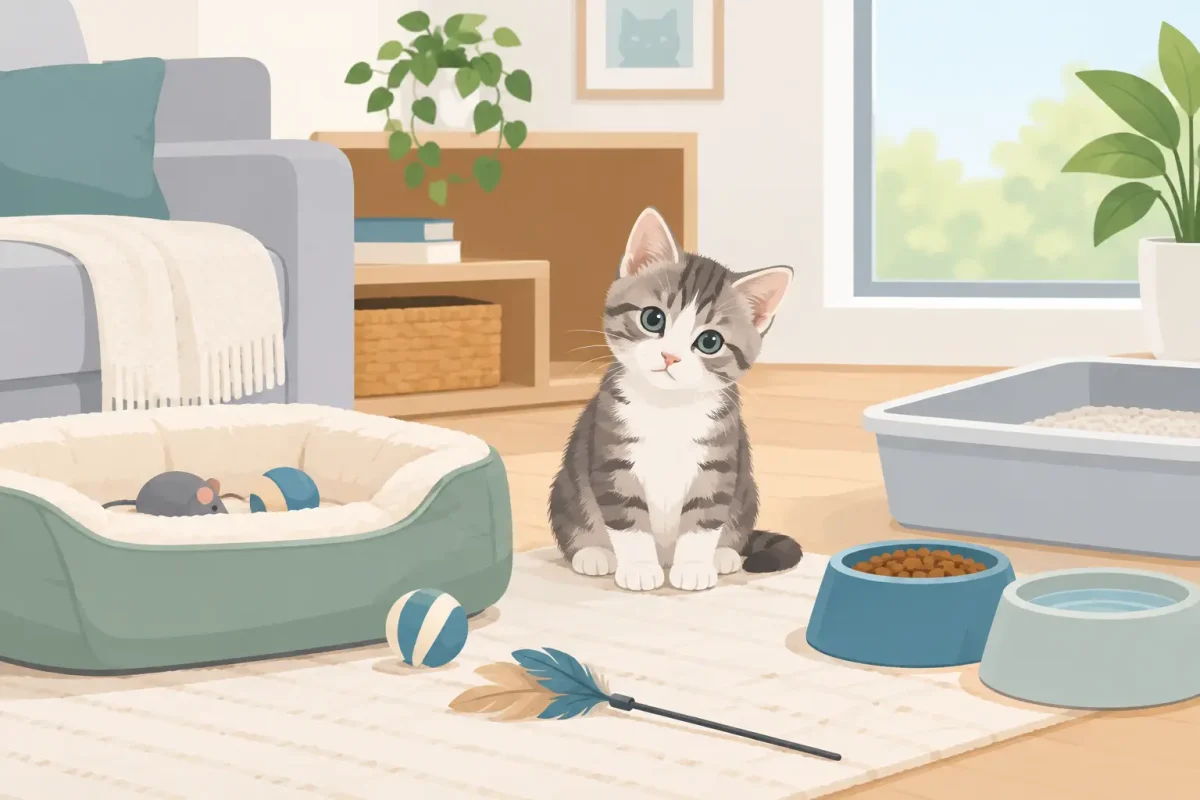
The first night with a kitten is often quieter than families expect. A curious little one may explore for ten minutes, then tuck behind a chair to listen to unfamiliar sounds. When you prepare home for kitten arrival before the carrier comes through the door, you give that small, well-loved companion a gentle place to land – and give yourself room to enjoy the beginning rather than scramble for supplies.
For Maine Coons and Ragdolls especially, the goal is not to create a perfect showroom. It is to create a safe, steady home where an affectionate, people-oriented kitten can learn your rhythms at a comfortable pace.
Start With a Quiet Kitten Room
A kitten does not need the whole house on day one. In fact, a large new space can feel overwhelming, particularly after a pickup day or travel. Begin with one calm, easy-to-clean room with a door that closes securely. A spare bedroom, office, or quiet bathroom can work well, provided it is comfortably warm and free of hiding spots you cannot safely reach.
Set up the room before arrival so your kitten does not have to watch you move furniture, open packages, or search for the litter scoop. Include a cozy bed or open carrier, fresh water, food dishes, a litter box, a scratching surface, and a few simple toys. A soft blanket that carries familiar scent from the kitten’s early home can be especially reassuring during the first few nights.
Place food and water well away from the litter box. Cats naturally prefer separation between eating and toileting areas, and this small detail can make settling in easier. Keep the room peaceful at first. Normal household sounds are helpful, but loud music, a revolving group of visitors, and eager introductions to every family member can wait.
Kitten-Proof Before Curiosity Takes Over
Kittens investigate with their paws, mouths, and remarkable climbing instincts. Maine Coon kittens may grow into notably large, capable cats, while Ragdoll kittens often bring a trusting, relaxed nature that makes careful supervision just as necessary. Neither breed should be assumed to know what is unsafe.
Walk through the starter room at kitten level. Get down low if you can. Look for cords that can be chewed, narrow gaps behind appliances, dangling blind cords, loose strings, and objects small enough to swallow. Secure electrical cords in protective covers or keep them out of reach. Remove rubber bands, hair ties, needles, thread, ribbon, and children’s small toys. These common household items can cause serious trouble if swallowed.
Plants deserve a careful check, too. Some popular houseplants are toxic to cats, and even nontoxic plants can invite digging or chewing. Move plants out of reach until you know how your kitten responds. Keep cleaners, medications, essential oils, laundry products, and food items behind closed doors. A kitten-proofed home is less about making every room bare and more about removing the hazards a quick, curious kitten is most likely to find.
As your kitten earns access to additional rooms, repeat the same check. Close toilet lids, secure trash cans, and make sure windows have sturdy screens. Never rely on a screen alone for an open-window cat perch, especially once a growing Maine Coon discovers the view.
Prepare Home for Kitten Comfort, Not Just Supplies
The most useful supplies are the ones that support daily comfort and predictable care. Choose shallow, sturdy dishes that are easy to wash, a litter box your kitten can enter without climbing, and an unscented litter similar to what the kitten already knows whenever possible. Sudden changes in food or litter can add unnecessary stress during an already big transition.
Ask your breeder what food and feeding schedule your kitten has been enjoying. Keeping that routine for the first week gives you a clear baseline for appetite and digestion. If you plan to transition foods, do it gradually and only after your kitten is eating comfortably in the new home.
A quality scratching post or sturdy cardboard scratcher is not an optional extra. Scratching helps kittens stretch, shed claw layers, and mark their space in a healthy way. Put a scratcher near where your kitten sleeps and later near furniture they show interest in. Reward the right choice with gentle praise or a favorite toy rather than scolding a kitten for doing what comes naturally.
You do not need to fill the room with toys. A wand toy used during supervised play, a lightweight ball, a soft toy, and a tunnel or box are plenty to begin with. Avoid toys with easily detached parts, long strings left unattended, or anything that can be torn apart and swallowed. Short play sessions several times a day are better than one long, overstimulating session.
Let Routine Build Trust
Kittens settle through repetition. Feed meals at roughly consistent times, scoop the litter box daily, and offer a few quiet moments of play, conversation, and affection throughout the day. A predictable rhythm helps a kitten understand that this new family is safe.
For remote workers, it can be tempting to keep a kitten in the office all day or respond to every tiny meow. Gentle companionship is wonderful, but rest matters too. Let your kitten nap without interruption. Young kittens sleep a great deal, and those quiet stretches support healthy growth and help prevent an overtired kitten from becoming extra wild in the evening.
Children should be included in the routine with clear, kind boundaries. Teach them to sit on the floor, allow the kitten to approach, and support the whole body if an adult says it is time to pick the kitten up. No chasing, carrying from room to room, or waking a sleeping kitten. The warmest bonds are built when a kitten learns that small hands and busy family life are calm and respectful.
Introduce Other Pets Slowly
A friendly dog or resident cat may eventually become a treasured companion, but a smooth relationship should never be rushed. Start with separation. Let pets smell one another under the door or exchange bedding for a day or two. This gives everyone time to process the new scent without the pressure of face-to-face contact.
When your kitten is relaxed in the starter room, offer brief, supervised visual introductions through a baby gate, cracked door, or other secure barrier. Keep your voice calm and sessions short. Give resident pets attention and positive reinforcement so the kitten does not feel like a disruption to their place in the family.
The pace depends on the animals involved. A calm, cat-savvy dog may be ready for careful supervised time sooner than a territorial adult cat. Hissing from a resident cat can be normal communication, but lunging, stalking, fixed staring, or repeated fear signals mean everyone needs more distance and time. There is no prize for a fast introduction. The best outcome is peaceful coexistence that lasts.
Make the First Week Small and Steady
Once your kitten is eating, drinking, using the litter box, and greeting you with growing confidence, begin opening one additional area of the home at a time. Supervise these explorations, then return to the starter room for rest. This gradual approach makes it easier to spot problems, protect the kitten from hazards, and prevent a frightened little one from disappearing into an inaccessible corner.
Expect personality to unfold in layers. Some Ragdoll kittens may seek a lap quickly, while others prefer to observe first. Some Maine Coon kittens may greet every new room as an adventure, while others take comfort in staying close to their people. Early confidence is lovely, but caution is not a flaw. Both are normal responses to a new home.
Keep your veterinarian’s contact information handy and arrange the first wellness visit according to the guidance you receive at pickup. Monitor appetite, water intake, litter box habits, energy, and any signs of sneezing, vomiting, diarrhea, or unusual lethargy. A quiet first day can be normal after travel; a kitten who refuses food or seems unwell should be discussed with a veterinary professional promptly.
At Maine Coon And Ragdoll House, we see the difference that familiar routines and patient handling can make. Your kitten has already begun life surrounded by everyday household care. With a prepared room, a gentle pace, and your steady presence, the next chapter can feel just as safe. Sit on the floor, offer a soft voice, and let your new companion choose the first brave step toward you.
