
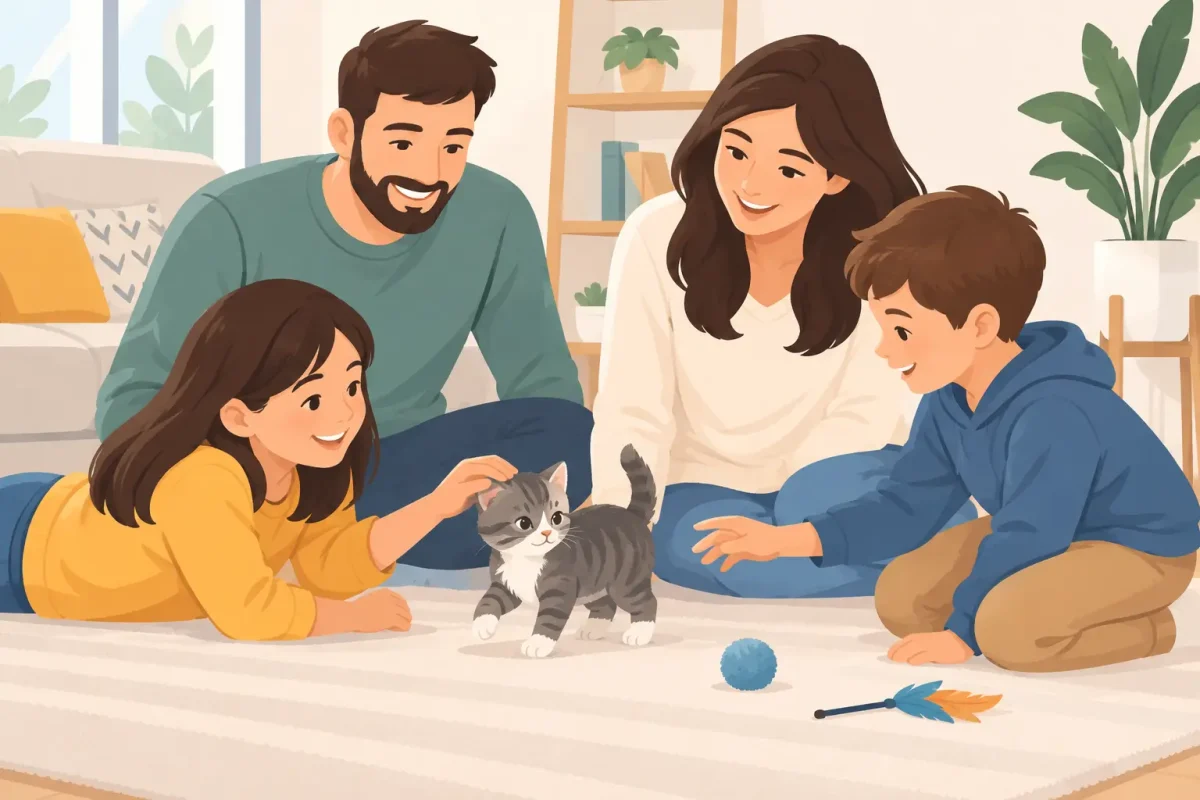
A kitten who walks over to investigate the vacuum, accepts a gentle cuddle after playtime, and recovers quickly from a new sound is showing the early signs of socialized kitten behavior. Those moments may look small, but they shape the experience of bringing home a companion who can relax, connect, and grow comfortably within the rhythm of family life.
For families choosing a Maine Coon or Ragdoll, temperament deserves as much attention as color, eye shade, or coat pattern. A beautiful kitten is a joy to admire. A well-loved kitten who feels secure with people and understands everyday home life can bring calm joy for many years.
What Socialized Kitten Behavior Really Means
Socialization is not about making a kitten fearless, overly dependent, or happy to be passed from person to person. It is the gradual, positive introduction to the sights, sounds, handling, routines, and people that are likely to be part of the kitten’s life. The goal is confidence, not constant excitement.
A socialized kitten usually learns that hands can be gentle, normal household sounds are not dangerous, and people are a source of safety as well as play. They have opportunities to experience being picked up briefly, having paws touched, hearing conversation and appliances, seeing visitors come and go, and settling after an active moment.
Every kitten remains an individual. One may greet new people at the door, while another watches from a chair before deciding to join the room. Both can be well socialized. The more meaningful question is whether the kitten can recover, stay curious, and build trust rather than remaining overwhelmed or frightened by ordinary changes.
The Home-Raised Difference
The early weeks of a kitten’s life are a precious learning period. Kittens raised as part of a home naturally encounter the ordinary activity that makes a house feel like a house: footsteps in the hallway, a television playing at a comfortable volume, dishes being put away, children laughing, and people moving through the room.
That exposure should be thoughtful. A kitten does not benefit from being startled repeatedly or forced into interactions. Gentle handling, predictable routines, rest periods, and quiet observation matter just as much as play. When kittens can approach new experiences at their own pace, they learn that they have choices and that their environment is safe.
At Maine Coon And Ragdoll House, daily care is part of the socialization process. Time spent feeding, cleaning, playing, cuddling, and simply sharing a room gives each kitten repeated chances to build trust with people. It also allows close observation of personality as it develops. A kitten who confidently seeks attention may be a wonderful fit for an active family, while a softer, more observant kitten may thrive in a quieter home with patient companionship.
Signs You May Notice in a Socialized Kitten
A secure kitten is not necessarily still or silent. Kittens are meant to play hard, nap deeply, and occasionally race through the room with impressive determination. What families often notice is a healthy balance between curiosity and comfort.
A socialized kitten may approach people willingly, enjoy a short cuddle, or settle nearby while you work from home. They may recover after a door closes or a pan drops in the kitchen instead of hiding for hours. During play, they tend to engage with toys and then return to their people for reassurance or rest.
Handling offers another useful clue. A kitten does not have to enjoy every nail trim or happily remain in anyone’s arms for long periods. Still, a kitten accustomed to respectful touch is often easier to guide through basic care. Briefly touching paws, looking at ears, brushing the coat, and lifting the kitten gently can become familiar parts of life rather than stressful events.
Look for openness, but keep your expectations realistic. Travel, a new home, unfamiliar scents, and separation from littermates are big changes. Even a beautifully socialized kitten may spend the first day quietly observing or choose a safe corner for a nap. Confidence often appears gradually as the kitten learns that this new family is dependable.
Maine Coon and Ragdoll Temperament, With Room for Individuality
Maine Coons are often appreciated for their playful, people-oriented nature. Many enjoy being near the action, following family members from room to room, and staying engaged well beyond the tiny-kitten stage. Their size and intelligence can make interactive play and respectful boundaries especially valuable. A socialized Maine Coon may be friendly and curious, but they still need daily outlets for climbing, chasing, and exploring.
Ragdolls are widely loved for their gentle presence and affectionate nature. Many enjoy quiet companionship, soft conversation, and time close to their people. That does not mean every Ragdoll will want to be held like a baby, nor does it mean they should be expected to tolerate handling they do not enjoy. The best relationships honor a cat’s signals while building trust through steady, kind contact.
Breed tendencies can help a family picture daily life, but they should not replace an honest conversation about the individual kitten. Energy level, confidence around children, comfort with other pets, and preferred style of affection can vary within every litter. The right match comes from looking at the whole kitten, not just a breed description or a favorite color.
How Families Can Protect That Early Confidence
The first week at home is not the time to introduce every room, every visitor, and every new toy. Start with one calm, prepared space that includes food, water, a litter box, a bed, a scratching surface, and a hiding option. Visit often, sit on the floor, and let the kitten make the first few choices about closeness.
Keep handling brief and pleasant at first. Pick up your kitten only when needed or when they are relaxed, support their body securely, and set them down before they become uncomfortable. Children should be shown how to pet gently and how to give the kitten space during meals, naps, and litter box visits. Loving a kitten also means allowing them to say, “not right now.”
For multi-pet homes, slow introductions are worth the patience. Scent swapping, separate spaces, and supervised visual contact give resident pets and the new kitten time to adjust without pressure. A friendly dog can still be too enthusiastic, and a calm adult cat may need several days or weeks before welcoming a new companion. Moving slowly protects everyone’s confidence.
Predictable routines also help. Offer meals at regular times, schedule a few short play sessions each day, and give your kitten quiet opportunities to rest. Maine Coons and Ragdolls both benefit from interactive play, sturdy scratching options, and regular grooming habits introduced with a gentle touch. These simple patterns teach a kitten what to expect from life with you.
Questions to Ask When Choosing a Kitten
A responsible breeder should be comfortable talking about more than coat color and availability. Ask where the kittens are raised, how they are handled, what household experiences they have had, and how their individual personalities are described. Ask about litter routines, veterinary care, nutrition, and the breeder’s guidance for the trip home and first days of adjustment.
It also helps to share your real household situation. Mention young children, visiting grandchildren, resident cats, dogs, work-from-home schedules, travel plans, and how much time you hope to spend grooming and playing. There is no prize for choosing the boldest kitten in every situation. A quieter kitten may be the better companion for a peaceful household, while an outgoing kitten may enjoy a busier family rhythm.
Honest matching is a kindness to both the family and the cat. It creates room for a kitten’s natural personality instead of asking them to become something they are not.
A socialized kitten arrives with a strong beginning, but trust continues to grow in the everyday moments that follow: a calm meal, a wand toy shared after work, a gentle brush before bed, and a family that notices when their new companion needs closeness or quiet. Give that relationship time, and your kitten can grow into the affectionate, confident heart of your home.
