
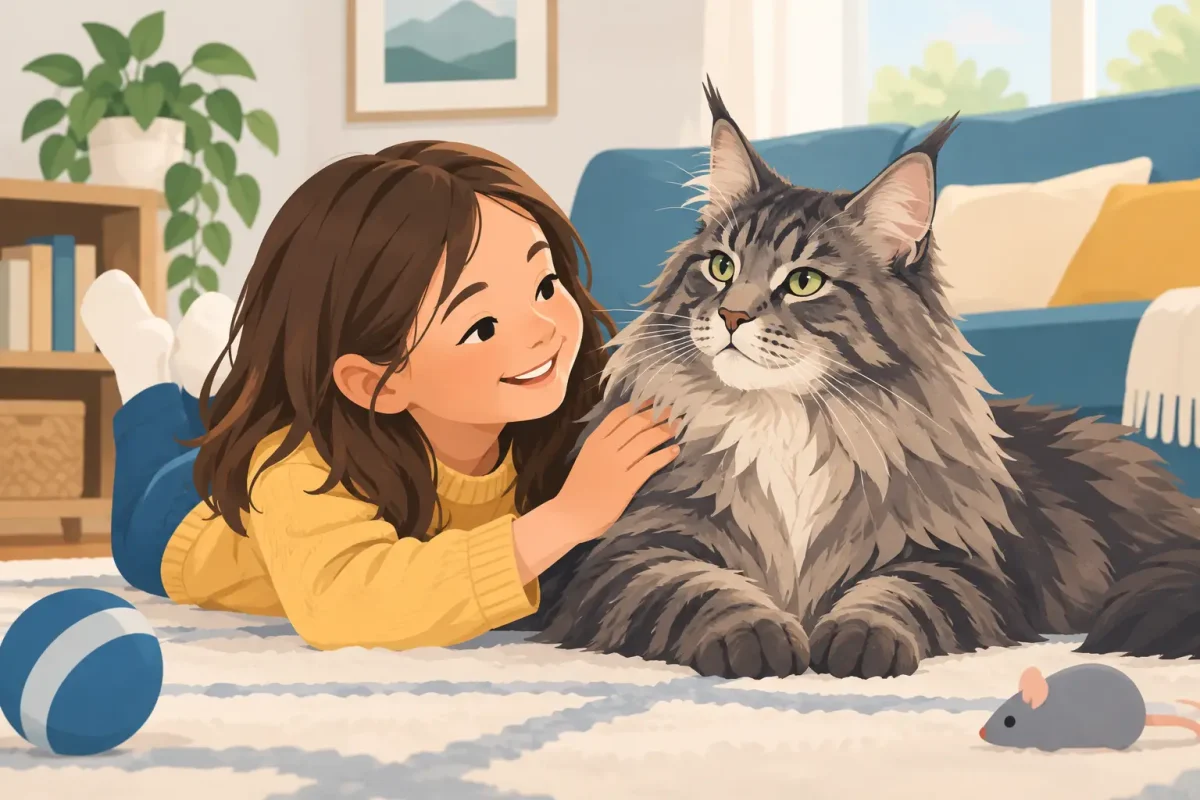
A Maine Coon can be the cat who waits outside a child’s bedroom door, joins a living-room game from a comfortable distance, and brings calm joy to a busy family evening. But are Maine Coons good with children in every home? Usually, they can be a wonderful fit, especially when the kitten’s temperament, early experiences, and the family’s expectations are thoughtfully matched.
Maine Coons are known for their large size, expressive faces, and big hearts, but their appeal to families is often rooted in something quieter: many are people-oriented cats that enjoy being included in everyday life. They are not typically fragile, high-strung cats who need a silent household. Still, no breed label can replace individual personality, respectful handling, and adult guidance.
Why Maine Coons Often Fit Family Life Well
Maine Coons tend to be social, curious, and adaptable. Many enjoy following their people from room to room, watching household activity, and settling nearby while the family reads, works, or plays. Their affectionate nature is often less about constant lap time and more about companionship. A Maine Coon may choose the back of the sofa, the foot of the bed, or a sunny spot beside the children’s play area simply because that is where the family is.
Their playful side can also make them especially engaging for children. Many Maine Coons retain a kitten-like interest in interactive toys well into adulthood. A wand toy, soft ball, or puzzle feeder gives children a positive way to build a relationship with the cat without grabbing, chasing, or expecting the cat to entertain itself.
Their substantial build can be reassuring to parents of gentle, cat-savvy children. A Maine Coon is generally sturdier than a very small kitten or a more delicate breed. That does not mean they should be carried roughly or treated like a stuffed animal. It simply means their size and confident presence can suit homes with normal family movement, voices, and activity.
Are Maine Coons Good With Children of Every Age?
Age matters as much as breed. A calm eight-year-old who understands how to let a cat come to them may form an easy bond with a Maine Coon. A curious toddler needs much closer supervision, even with the sweetest kitten. Young children are still learning body control and empathy. They may hug too tightly, pull at a tail, or approach during a meal or nap without meaning any harm.
For toddlers and preschoolers, the safest approach is to make every interaction adult-led. Help the child offer a gentle hand, stroke the cat’s shoulders or back, and stop before the kitten becomes overwhelmed. Teach simple rules early: no lifting the kitten, no chasing, no touching while the cat eats, and no bothering the cat in its bed, carrier, or litter area.
School-age children can usually take a more active role. They can help refresh water, use a wand toy, brush under supervision, and learn to notice a cat’s signals. A swishing tail, flattened ears, crouched body, or quick retreat means the cat needs space. These small lessons protect the relationship and give children a healthy respect for an animal’s boundaries.
Teenagers often enjoy the Maine Coon’s interactive personality and can take on more of the daily routine. Even then, the adults in the home remain responsible for veterinary care, grooming, nutrition, and making sure the cat’s needs are consistently met.
Temperament Matters More Than Coat Color
Families sometimes begin their search with a favorite color or dramatic ear tufts in mind. Those details are lovely, but a kitten’s personality should lead the decision. In a home with children, we look for a kitten that recovers well after normal household sounds, shows curiosity around people, accepts gentle handling, and has a balanced way of engaging with the world.
A bold kitten is not automatically the best family kitten. An extremely busy household may do better with a steady, affectionate kitten that enjoys play but also knows how to settle. A quieter family with older children may love a more observant kitten that takes a little longer to warm up. The goal is not to choose the loudest or most outgoing kitten. It is to find a companion whose natural rhythm works with your home.
At Maine Coon And Ragdoll House, kittens are raised as part of family life, with daily handling and exposure to normal household routines. That early foundation helps us observe each kitten as an individual and have honest conversations with families about the kind of home that may suit them best.
Socialization Creates Confidence, Not a Perfect Cat
Early socialization has a meaningful effect on how comfortably a kitten handles family life. A well-loved kitten who has experienced gentle human contact, household sounds, nail trims, brushing, play, and quiet rest periods has a stronger starting point when moving into a new home.
Even so, a kitten needs time to adjust. The first few days may bring hiding, reduced appetite, or extra sleep. Children may be excited to meet their new family member, but a slow introduction is kinder and usually leads to a more confident cat. Start with one calm room stocked with food, water, a litter box, scratching options, toys, and a cozy place to retreat.
Let the kitten choose the pace. Sit on the floor with your child and allow the kitten to approach. Gentle play is often easier than petting at first because it gives the kitten distance and choice. Over time, a secure Maine Coon will often begin exploring the household and seeking out familiar people on its own terms.
The Family Habits That Help a Maine Coon Thrive
A child-friendly cat also needs a cat-friendly home. Maine Coons are intelligent, active companions, and boredom can show up as nighttime zooming, counter surfing, or mischief involving anything left within reach. Daily interactive play, sturdy scratching posts, safe climbing areas, and a predictable routine give their energy a good outlet.
Grooming deserves attention, too. Maine Coons have beautiful long coats that need regular care to prevent tangles and mats, particularly around the chest, belly, underarms, and hindquarters. Brushing can become a sweet family ritual when introduced gently. Children can help with short, calm sessions, but an adult should check the coat thoroughly and handle any areas the cat finds sensitive.
Because Maine Coons grow into large cats, they also need appropriately sized supplies. Choose a roomy litter box, a strong cat tree, and a carrier built to safely support an adult cat. These details may seem small, but they make daily life more comfortable for a cat who will likely become one of the biggest personalities in the house.
When a Maine Coon May Not Be the Right Match
Maine Coons are affectionate, but they are still cats. They may not enjoy being carried for long periods, dressed up, or included in every noisy game. A family looking for a pet that tolerates unrestricted handling may be disappointed, and the cat may become stressed.
A Maine Coon may also be less suitable if the household cannot provide regular grooming, play, and consistent care. Their social nature means they often appreciate company, but that does not mean they should be left to manage a chaotic environment without a quiet place to rest. Homes with very young children can absolutely succeed, provided adults are ready to supervise closely and protect the kitten’s routines.
Allergies are another practical consideration. Maine Coons are not hypoallergenic, and their long coat can make shedding more noticeable around the home. Meeting cats in person and discussing your family’s needs before making a commitment can prevent a difficult surprise later.
Helping Children Build a Lasting Bond
The best child-cat relationships are built through small, repeatable moments. A child who learns to toss a toy, offer a treat after a calm brush, or sit quietly while the cat chooses to come near is learning trust. The Maine Coon learns that children are predictable, gentle, and fun to be around.
Give the cat places where children do not follow. A high perch, a quiet bedroom, or a covered bed can provide a valuable break when the household is lively. In return, invite children to participate in care in age-appropriate ways, so their excitement becomes responsibility rather than constant attention.
A Maine Coon does not need to be the center of every family moment to become deeply connected to the family. With patient introductions, kind boundaries, and a kitten matched to your household’s pace, this gentle giant can grow into a steady companion beside your children for many memorable years.
