
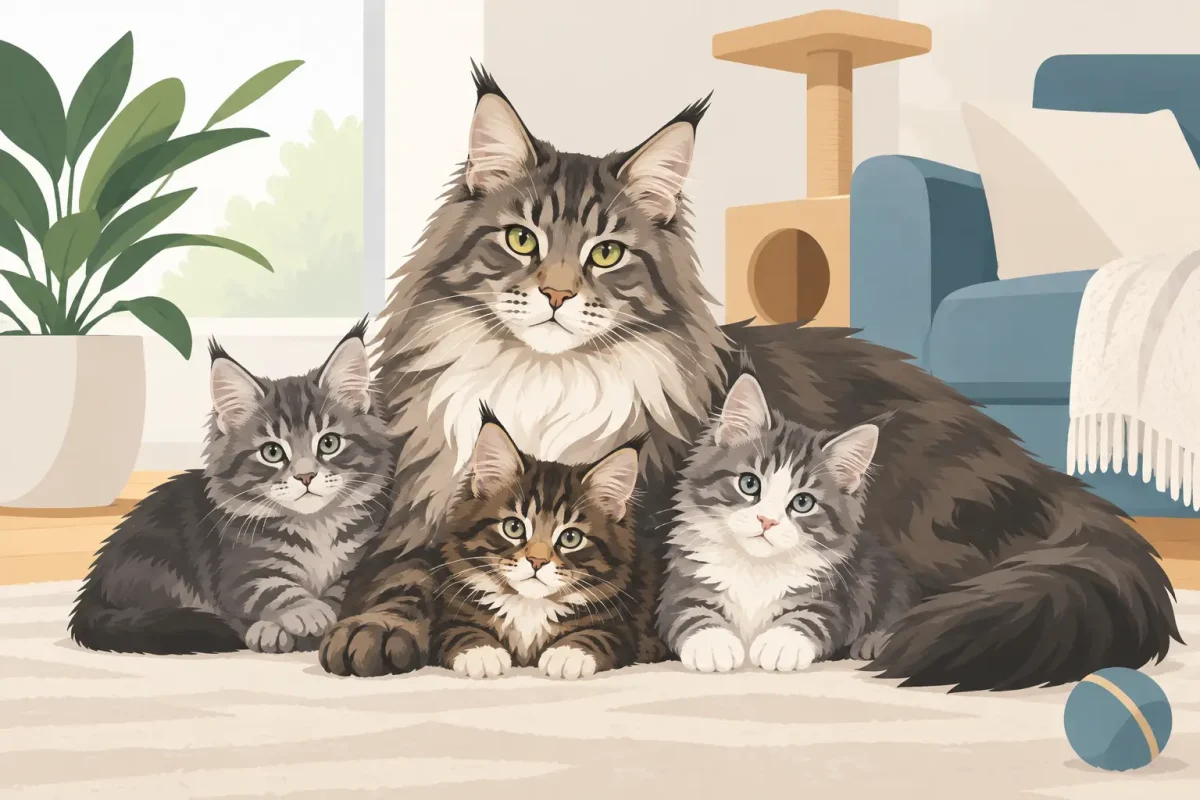
The first evening home can feel surprisingly quiet: a large pair of curious eyes from beneath a chair, children whispering nearby, and a new kitten taking in every scent and sound. Maine Coon family adjustment is not about expecting instant confidence. It is about giving a social, intelligent kitten enough calm, consistency, and choice to learn that this new household is safe.
Maine Coons often form warm bonds with the people around them, but each kitten arrives with an individual comfort level. Some stroll out to investigate within an hour. Others need a day or two before they are ready to play in the open. A gentle start respects both personalities and usually leads to the affectionate, involved companion families hope for.
Start Small, Even in a Big Home
A Maine Coon kitten does not need access to every room on the first day. A smaller, prepared room gives your kitten a place to settle without being overwhelmed by footsteps, appliances, pets, and well-meaning attention. Choose a quiet bedroom, office, or other comfortable space where the door can close.
Set up food and water away from the litter box, along with a bed, a scratching surface, a few safe toys, and a hiding spot. Keep the room comfortably warm and avoid constantly moving items around. Familiar routines are reassuring, especially after pickup or travel.
Spend time sitting quietly in the room. Let your kitten approach rather than reaching in or pulling them from a hiding place. Speak softly, offer a toy, and allow short visits to be enough at first. This patience is not distance. It is how trust begins.
Keep the First Week Predictable
The first week should be pleasantly ordinary. Feed meals at regular times, scoop the litter box frequently, and build in a few gentle play sessions each day. Maine Coons are often playful and people-oriented, so interactive toys can help a shy kitten gain confidence without feeling pressured to be held.
Try to keep visitors to a minimum during these early days. A kitten who has just left the only home they have known needs time to learn your family’s voices and daily rhythm. There will be plenty of time for introductions once your kitten is eating, using the litter box, and coming forward willingly.
Help Children Build Trust, Not Excitement
For children, bringing home a Maine Coon can feel like welcoming a small, fluffy best friend. Their enthusiasm is lovely, but a kitten needs adults to set the pace. The goal is not to make a child stay away from the kitten. It is to teach calm, respectful interaction from the beginning.
Show children how to sit on the floor and let the kitten come to them. Gentle strokes along the back or cheeks are usually better received than hugs, chasing, or being carried from room to room. Even a confident kitten can become tired of repeated handling.
It helps to give children meaningful, low-pressure jobs. They can help refresh water, choose a wand toy for supervised play, or read quietly near the kitten’s safe room. These small routines create positive associations and help children understand that caring for a pet means noticing what the pet needs.
A Maine Coon’s size can be misleading. These kittens may grow into substantial cats, but they are still babies when they join a family. Teach everyone to watch for signs that the kitten needs a break, such as a flicking tail, flattened ears, hiding, or walking away. Respecting those signals helps prevent fear and encourages a secure bond.
Maine Coon Family Adjustment With Other Pets
A successful introduction to resident pets is usually slow, scent-led, and supervised. It is tempting to see whether everyone will “work it out,” but fast introductions can create stress that takes longer to undo. A few patient days, or sometimes a few weeks, are well worth it.
Begin with separate spaces. Let your existing cat or dog notice the newcomer’s scent under the door, then trade bedding or gently rub each pet with a clean cloth and place it near the other pet’s resting area. Feed meals on opposite sides of a closed door so both animals connect the new scent with something positive.
When both pets seem relaxed, allow brief visual meetings through a gate, cracked door, or other secure barrier. Keep sessions short and end before either animal becomes overwhelmed. Calm curiosity is a good sign. Staring, growling, hissing, lunging, or a stiff body means it is time to slow down.
Dogs should be introduced on leash, with one adult focused on the dog and another able to support the kitten. Never place a kitten directly in front of a dog or force close contact. For cat-to-cat introductions, make sure both cats have escape routes and vertical spaces, such as a cat tree or sturdy perch. Maine Coons often enjoy climbing, and a high resting place can make a new kitten feel much more secure.
Some pets become friends quickly; others simply learn to share a home peacefully. Both outcomes can be successful. The best pace depends on the resident pet’s temperament, past experiences, and ability to remain calm.
Make Room for a Maine Coon’s Growing Body and Busy Mind
Maine Coons are known for their impressive size, tufted paws, expressive faces, and big hearts. They are also often observant cats who enjoy being near family activity. As your kitten gains confidence, offer safe ways to participate in the household without expecting constant entertainment from people.
A sturdy scratching post, a stable cat tree, and toys that encourage chasing and pouncing give your kitten appropriate outlets for energy. Rotate toys every few days to keep play interesting. Short, active play sessions are especially useful before meals and in the evening, when many kittens become more energetic.
Plan ahead for the adult cat your kitten will become. Lightweight furniture and tiny kitten accessories may not hold up for a full-grown Maine Coon. Choose a roomy litter box, a solid carrier, wide scratching surfaces, and furniture designed to support a larger cat. These practical choices make daily life more comfortable and reduce avoidable frustrations later.
Grooming is also part of family adjustment. A Maine Coon’s coat can be wonderfully soft and full, but it needs regular care to stay comfortable. Begin with brief, positive brushing sessions while your kitten is relaxed. A few minutes several times a week is easier for both of you than waiting for tangles to form. Pair brushing with praise, a favorite toy, or a small treat so it becomes part of a trusted routine.
Choose Connection Over Constant Contact
A well-socialized kitten may want to follow you from room to room, supervise remote work, or settle near the family during movie night. That companionship is one reason Maine Coons are cherished family cats. Still, closeness should be on the cat’s terms, especially during the first few weeks.
Offer affection often, but let your kitten decide how much they want at a given moment. Some Maine Coons become lap cats; others prefer to lean against a leg, sleep at the foot of the bed, or sit beside their people. A cat who chooses proximity freely is building a deeper, more lasting kind of trust.
This is also why temperament matching matters more than choosing a kitten by color alone. A lively household with children and a friendly dog may suit a bold, outgoing kitten. A quieter couple or first-time cat owner may prefer a more easygoing companion. At Maine Coon And Ragdoll House, we pay close attention to each kitten’s daily personality, handling experiences, and comfort around normal home activity because those details help guide a thoughtful match.
When to Pause and Ask for Help
Most settling-in behaviors are temporary. A kitten may hide, sleep more than expected, eat a little less during the first day, or vocalize at night while adjusting to a new place. Keep the environment quiet, offer familiar food, and give them time.
Contact your veterinarian promptly if your kitten refuses food for an extended period, has repeated vomiting or diarrhea, seems unusually weak, has trouble breathing, or does not use the litter box. If a pet introduction is growing more tense instead of improving, separate the animals and ask for guidance before trying again.
The kindest welcome is not a perfect schedule or a perfectly decorated cat room. It is a family that notices, waits, plays, and makes room for a kitten to become comfortable at their own pace. With that steady care, your Maine Coon can soon move through the home with calm joy, looking less like a visitor and more like they have always belonged there.
