
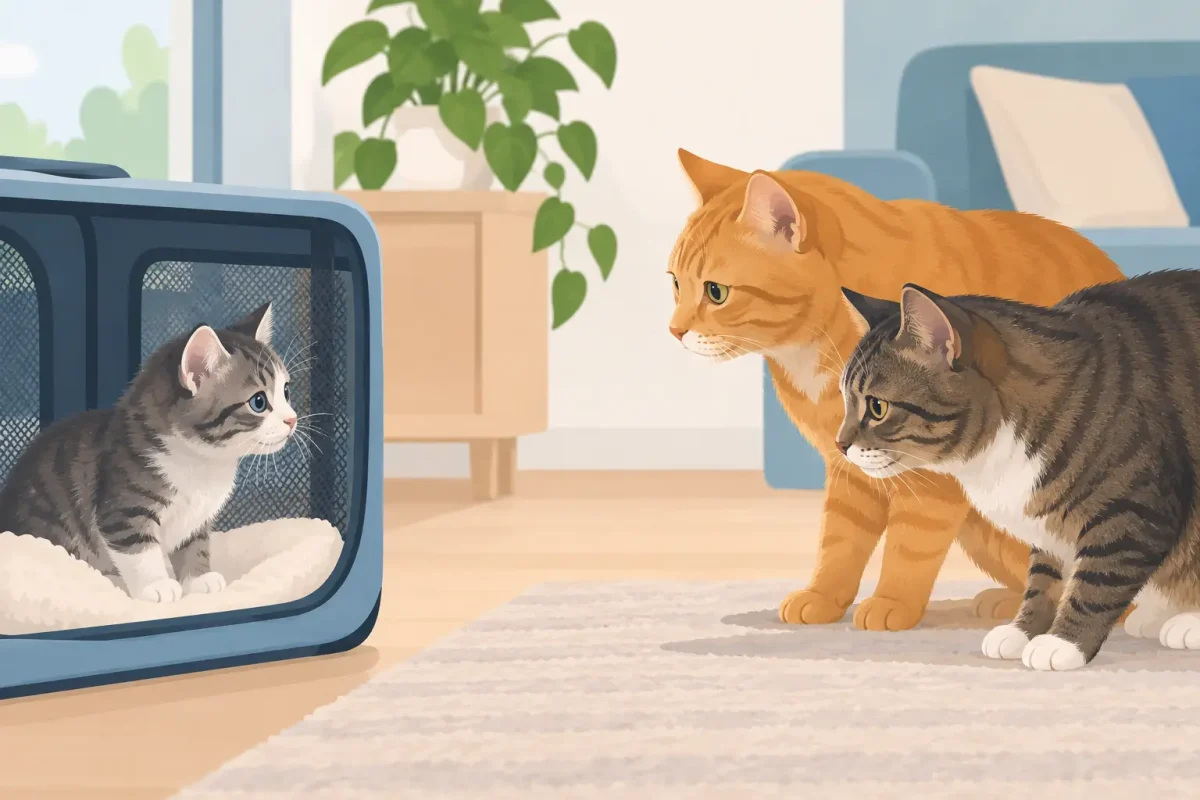
The first meeting should not happen in the carrier, in the middle of the living room, or with everyone watching closely. When families ask how to introduce kitten to cats, the kindest answer is also the least dramatic: give the cats time to become familiar before asking them to share space. A slow introduction protects the confidence of your resident cat and gives your well loved kitten the secure start they deserve.
A little hissing, staring, or cautious sniffing can be normal. Chasing, cornering, repeated swatting, or a cat refusing food are signs the process needs to slow down. There is no prize for finishing introductions in a weekend. The goal is not instant friendship. It is a peaceful home where each cat feels safe.
Before You Introduce a Kitten to Resident Cats
Set up a separate kitten room before your new family member arrives. Choose a quiet bedroom, office, or bathroom with a secure door. Your kitten needs a litter box, fresh water, meals, a soft place to sleep, scratching options, toys, and a hiding spot. This small room is not a punishment. It is a calm home base where a kitten can rest after travel and learn the sounds and rhythms of your household.
Your resident cat also needs reassurance. Keep their meals, playtime, favorite resting places, and daily attention as consistent as possible. Many adult cats find a newcomer more difficult when their own routine suddenly changes. Offering familiar affection and play tells them they have not been replaced.
Before cats meet, make sure your kitten has received appropriate veterinary care and is free from signs of illness such as diarrhea, sneezing, eye discharge, or poor appetite. Ask your veterinarian about the right health precautions for your household, especially if you have senior cats, cats with medical needs, or cats who go outdoors. A short separation period also gives you time to notice whether your kitten is eating, using the litter box, and settling in comfortably.
Start With Scent, Not Sight
Cats understand the world through scent long before they are ready for a face-to-face hello. For the first few days, let both cats smell one another through the closed door. You can gently rub a clean cloth along a kitten’s cheeks, where friendly scent glands are located, and leave it near your resident cat’s resting area. Do the same with your resident cat’s scent for the kitten.
Treats and meals can create a positive association with this new smell. Feed each cat on opposite sides of the closed door, beginning far enough away that both will eat comfortably. Over several meals, move bowls closer to the door. If either cat stops eating, growls intensely, or seems tense, move the bowls back and give them more distance.
You can also switch rooms briefly once both cats are calm. Put your resident cat in another comfortable area, then allow the kitten to explore the main space for a few minutes. Later, let the resident cat investigate the kitten room without the kitten present. This scent exchange lets each cat gather information without feeling trapped or challenged.
How to Introduce Kitten to Cats Through a Barrier
After a few calm days with scent sharing, allow a brief visual introduction through a secure barrier. A tall baby gate with a screen, a pet gate, or a slightly opened door secured with a doorstop can work, as long as no cat can squeeze through or get hurt. Keep the first sessions short and relaxed.
Offer treats, a favorite wand toy, or a small meal while the cats can see each other. The message is simple: seeing the other cat predicts something pleasant. Do not hold either cat up to the barrier or force them to remain there. Let them look, sniff, walk away, and return on their own terms.
Some hissing is communication, not failure. Your resident cat may be saying, “I see you, and I need more space.” A kitten may puff up, hide, or become extra bouncy. End the session before either cat becomes overwhelmed, then try again later. Several short, successful views are much better than one long, stressful encounter.
Move forward when both cats can eat, play, or relax near the barrier with only mild curiosity. This may take two days, two weeks, or longer. Personality matters more than the calendar. A confident, playful Maine Coon kitten may be eager to investigate, while a more gentle Ragdoll kitten may need quieter, shorter sessions. Your resident cat’s history matters too. A social adult may adjust quickly, while a cat who has always lived alone may need more patience.
Let the First Shared Visits Stay Short
When both cats appear calm through the barrier, arrange a supervised visit in a larger room. Begin after each cat has eaten and had a chance to play, since a tired kitten is less likely to bounce directly at an adult cat. Keep escape routes open and avoid tight spaces where either cat could feel cornered.
Have a toy ready to redirect the kitten if they become too enthusiastic. Kittens often want to play immediately, but an adult cat may not appreciate a pounce on the tail. Redirecting the kitten toward a wand toy or tossed soft toy protects the relationship before irritation builds.
Sit quietly nearby, but try not to hover. Cats read our tension. If they sniff and walk away, that is a successful interaction. If your resident cat gives a brief hiss and retreats, allow it. Separate the cats calmly if there is hard staring, stalking, growling that escalates, repeated swatting, or any chasing that does not stop when one cat tries to leave.
Do not punish hissing or growling. Punishment can make cats associate the newcomer with fear and may teach them to hide their stress until it becomes more serious. Instead, calmly increase distance, return to barrier visits, and try again when everyone is settled.
Give Every Cat Enough of Their Own Resources
Even cats who enjoy one another need choices. Competition over a favorite bed, litter box, or sunny window can create tension long after the introduction period. Place resources in more than one area of the home so no cat has to pass another cat to meet a basic need.
For a multi-cat household, provide at least one litter box per cat, plus one extra, placed in separate locations. Offer multiple water stations, separate feeding areas, more than one scratching surface, and several sleeping spots. Vertical spaces such as sturdy cat trees, shelves, or window perches are especially helpful because they let a resident cat observe the household without being approached.
This matters for large, social breeds as well. Maine Coons often enjoy being close to their people and may use their size with cheerful confidence during play. Ragdolls are frequently gentle and people-oriented, but they should still have places to retreat and rest undisturbed. Temperament is always individual, so watch the cat in front of you rather than relying only on breed expectations.
Keep the Household Calm While They Adjust
For the first few weeks, give your cats predictable days. Keep introductions quiet, limit visitors if possible, and ask children to let the cats approach rather than carrying or chasing them. Teach children that a cat under furniture, on a high perch, or in their kitten room is asking for space.
Continue individual play and affection with your resident cat. A few minutes of focused play can release tension and preserve the routines that make them feel secure. Give the kitten gentle handling, play, and rest periods too. A home-raised kitten may be familiar with normal household activity, but every new home has different sounds, scents, and expectations.
If the cats have a setback, return to the last stage that felt easy. A move, visitors, a noisy holiday, or an overly energetic play session can temporarily raise stress. Stepping back is not starting over. It is simply listening to what your cats are telling you.
When to Ask for Extra Help
Contact your veterinarian if either cat stops eating, avoids the litter box, begins spraying, hides for long periods, develops digestive upset, or has any physical symptoms. For persistent fear, aggression, or conflict, a qualified feline behavior professional can help you create a plan tailored to your home. Early support is often much easier than waiting for tension to become a habit.
The quiet milestones are the ones worth noticing: your resident cat choosing to nap nearby, your kitten playing without being chased away, or two cats calmly passing in the hallway. Let those small moments build. With steady routines, enough space, and a little patience, your new kitten can become part of the family at a pace that feels safe for every cat.
