
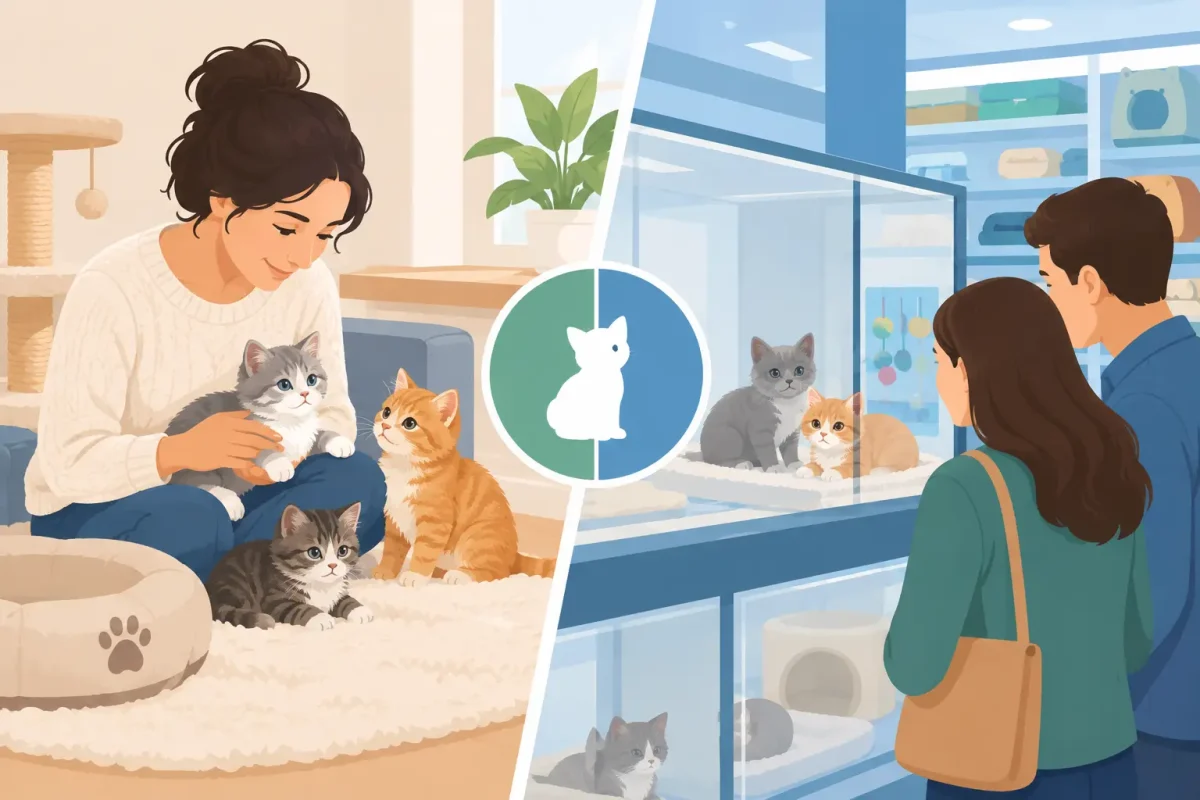
A kitten may be small enough to curl up in one arm, but the choice of where that kitten begins life can shape the first months you share together. When considering a home breeder versus pet store, the meaningful question is not simply where a kitten is available. It is whether you can understand that kitten’s early care, personality, health background, and readiness for your particular home.
For families looking for a Maine Coon or Ragdoll, this matters even more. These breeds are known for their loving natures, striking looks, and close connection with their people. A beautiful coat may catch your eye first, but a confident temperament and a thoughtful early start are what help a kitten grow into a calm, affectionate companion.
Home Breeder Versus Pet Store: What Changes?
A responsible home breeder raises kittens in a household setting and is directly involved in their daily development. The breeder knows who the kitten’s parents are, observes each kitten’s personality as it emerges, and can often describe how that kitten responds to being held, household sounds, visitors, children, or other pets.
A pet store experience can be different. Some stores work with local rescues or carefully selected breeders, while others may have less direct knowledge of the kitten’s original environment, parents, and early routine. That does not mean every pet store kitten will have problems. It does mean buyers should ask more questions and expect clear, specific answers before making a commitment.
The difference is often visibility. With a home-raised kitten, you may be able to learn about the care behind the kitten, not just the kitten in front of you. For a family preparing to welcome a long-term indoor companion, that context offers real peace of mind.
Why Early Home Life Matters
The first weeks of a kitten’s life are full of quiet learning. Kittens discover whether footsteps, a vacuum, a doorbell, gentle hands, and the rhythm of family life are ordinary and safe. They also learn from their mother, littermates, and the people who care for them every day.
A well-run home breeding program gives kittens regular, age-appropriate handling and exposure to normal household activity. This is not about forcing a kitten into constant excitement. It is about building secure routines: clean spaces, nutritious meals, play, rest, kind human interaction, and gradual exposure to the sounds and movement of a real home.
That foundation can be especially helpful for Maine Coons and Ragdolls. Maine Coons are often curious, interactive cats with big hearts and playful energy. Ragdolls are frequently gentle, people-oriented companions who enjoy calm closeness. Individual personalities vary within every litter, of course. A thoughtful breeder pays attention to those differences instead of promising that every kitten will behave exactly the same way.
Health Information Should Feel Clear, Not Vague
Whether you are speaking with a breeder or a pet store, health questions deserve direct answers. A responsible source should be comfortable discussing veterinary care, age-appropriate vaccinations, parasite prevention, feeding routines, and the health information available for the kitten and its parents.
For pedigreed kittens, planned pairings matter. Reputable breeders consider the health and temperament of their breeding cats and use veterinary guidance as part of their wellness practices. They should also explain what paperwork, health guarantee, or ongoing support comes with the kitten.
Be cautious if you feel pressured to decide quickly or if basic questions are brushed aside. You should not have to guess about a kitten’s age, current diet, medical records, or where it was raised. Honest communication is one of the simplest signs that a seller takes both kittens and future families seriously.
Questions Worth Asking Before You Commit
A good conversation should leave you with a clearer picture of the kitten’s life so far. Ask where the kitten was raised, how often it has been handled, what its daily routine looks like, and whether it has met children, cats, or calm dogs. Ask about the parents’ temperaments and any breed-relevant health information the breeder can provide.
It is also helpful to ask how the seller decides when a kitten is ready to leave. A kitten should have enough time with its mother and littermates to develop important social skills. The right timing supports a smoother adjustment once the kitten arrives in your home.
Finally, ask what happens after pickup or travel. Bringing home a kitten is joyful, but the first week can include shy moments, appetite changes, and a need for patient reassurance. A caring breeder remains available to offer practical transition guidance rather than disappearing once the payment is complete.
The Best Match Is More Than Color
It is natural to fall in love with a particular color, pattern, or pair of blue eyes. Still, your day-to-day life should guide the final decision. A family with young children may do best with a kitten that has shown a steady, outgoing nature. A quieter couple may be drawn to a gentle kitten that enjoys lap time and calm play. A multi-pet household may need a kitten with confidence, curiosity, and a gradual introduction plan.
This is where a home breeder can offer a special advantage. Because they spend time with the litter each day, they can often help connect personality traits to household needs. They may know which kitten eagerly greets people, which one watches before joining a game, and which one settles happily into a cuddle after playtime.
No one can predict every detail of an adult cat’s personality. Environment, routine, and patient care will continue to shape your kitten long after they come home. But starting with an informed match gives everyone a more comfortable beginning.
A Pet Store May Be Convenient, But Convenience Is Not the Whole Story
Pet stores can feel appealing because kittens may be immediately available and easy to see in person. For some buyers, that accessibility is valuable. Yet a quick purchase can make it harder to slow down and consider the long view: grooming needs, veterinary expenses, temperament, travel home, and the commitment of caring for a cat for many years.
Maine Coons, for example, are large, social cats that benefit from room to play, regular grooming, and engaged companionship. Ragdolls are often affectionate and adaptable, but they also thrive with gentle interaction and a secure indoor routine. Neither breed is simply a decorative pet. Both deserve a home prepared for their needs.
A responsible breeder may have a reservation process or waitlist rather than a kitten ready to leave that afternoon. Waiting can be difficult when your heart is ready now. Still, that time often reflects intentional planning, careful placement, and a focus on raising well-loved kittens rather than moving kittens quickly.
How to Recognize a Caring Source
Look for consistency between what you are told and what you can learn about the kitten’s care. A trustworthy breeder communicates clearly, welcomes reasonable questions, and takes time to learn about your home. They do not treat every buyer as interchangeable.
At Maine Coon And Ragdoll House, matching a kitten is approached as a family decision. The goal is not simply to choose the first available kitten, but to help future owners find a companion whose energy, sociability, and care needs fit naturally into their lives.
You should also expect guidance about practical preparation. A kitten needs a quiet first room, familiar food, a litter box, safe toys, and time to settle at their own pace. Families with other pets should plan slow introductions rather than expecting instant friendship. These details may seem small, but they create the calm, steady start a kitten needs.
Choosing where your kitten comes from is really choosing the beginning of a relationship. Take the time to ask, listen, and look beyond the first adorable photograph. The right kitten, raised with care and matched thoughtfully, brings not only beauty into a home, but the everyday comfort of a companion who feels safe enough to share their whole heart.
