
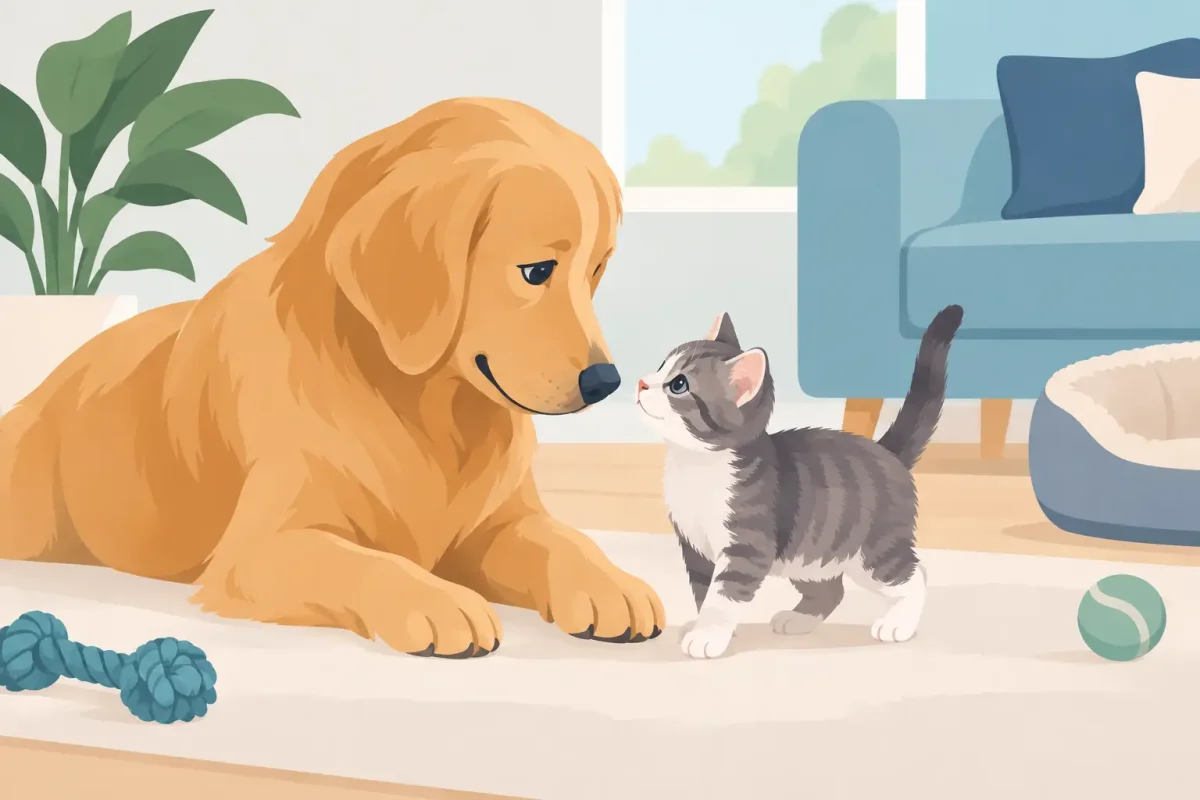
A kitten may be small, but her arrival changes the rhythm of a home. If you already share your life with a dog, the question is not simply, “can kittens live with dogs?” It is whether each animal can feel safe, understood, and unhurried as they learn to share space. With the right match and a patient introduction, many dogs and kittens become affectionate companions, or at least peaceful housemates.
At Maine Coon And Ragdoll House, we believe a kitten’s early experience with everyday household life helps build confidence. Still, even a well-loved, socialized kitten needs time to understand a new dog, new sounds, and a new routine. The first few days should be quiet, structured, and focused on security rather than friendship.
Can Kittens Live With Dogs Safely?
Yes, kittens can live safely and happily with dogs, but breed, size, and personality alone do not decide the outcome. A calm, well-trained dog with a history of gentle behavior around smaller animals may adjust beautifully. A friendly but excitable dog may also succeed with more management and a slower pace. A dog with strong chasing instincts, guarding behavior, or a record of aggression requires especially careful consideration before bringing home any kitten.
The kitten matters, too. A confident kitten may recover quickly from a surprising bark or curious sniff, while a softer-natured kitten may need longer in her own room before she is ready to explore. Neither response is wrong. The goal is to let trust develop at the pace of the more worried pet.
Maine Coons and Ragdolls are often admired for their affectionate, people-oriented natures. Many enjoy being near family activity and can adapt well to a respectful dog. Yet no cat breed comes with a guarantee that every individual kitten will love canine company. Thoughtful matching, early socialization, and your dog’s manners are more meaningful than a breed label.
Start With a Safe Room, Not a Face-to-Face Greeting
Before your kitten arrives, prepare one calm room that belongs to her alone. This is not a punishment or a place to keep her hidden. It is her base camp, where she can eat, sleep, use the litter box, and settle into the scents and sounds of her new family without being watched by the dog.
Include a cozy bed, water, food, toys, a scratching surface, and a litter box placed well away from food and water. Give her hiding choices as well, such as a covered bed or open carrier. A kitten who knows she can retreat is more likely to become curious on her own terms.
Keep the dog out of this room at first. Let both animals become aware of one another through a closed door. You can exchange a small blanket or soft cloth between them so each learns the other’s scent without the pressure of direct contact. Feed meals on opposite sides of the door if both pets remain relaxed. This helps create a pleasant association with the unfamiliar smell.
For some homes, a day or two is enough before moving ahead. For others, particularly where the dog is very interested or the kitten is timid, this stage may last a week or longer. There is no prize for moving quickly.
Make the First Meetings Brief and Boring
When both pets seem calm around the closed door, begin visual introductions with a secure barrier such as a tall pet gate. The dog should be on a leash and should have had exercise beforehand, not be arriving full of unused energy. Keep your voice low and matter-of-fact. Your kitten should always have a clear path away from the gate and access to a high resting spot.
Reward the dog for looking at the kitten calmly, then looking back at you. A relaxed body, loose tail, soft eyes, and the ability to respond to a familiar cue are encouraging signs. Do not reward staring, whining, lunging, pawing at the gate, or intense fixation. Instead, create more distance and end the session before either pet becomes overwhelmed.
Short sessions work best. A few peaceful minutes, repeated over several days, build a more reliable foundation than one long meeting that leaves everyone tense. Your kitten may choose to watch from across the room at first. That is progress. Curiosity without panic is enough.
Once barrier meetings are consistently calm, allow supervised time in the same room with the dog still leashed. Do not place the kitten in the dog’s face or hold her in your arms for an introduction. Being held removes her ability to leave, and a frightened kitten may scratch simply because she feels trapped. Let her decide whether to approach.
Give Your Kitten the High Ground
Dogs and kittens communicate differently. A playful dog may mean no harm when he bounces, noses, or follows, but a kitten can experience that attention as frightening. Vertical space gives her control. Cat trees, sturdy shelves, window perches, and furniture she can safely climb allow her to observe family life without being at floor level with the dog.
Use baby gates and separate zones even after the first introductions go well. Your kitten should always be able to reach food, water, and a litter box without being cornered or followed. It is wise to keep the dog away from the litter box, both for your kitten’s privacy and to prevent an unpleasant habit that can develop quickly.
Never leave a new kitten and dog together unsupervised, even if their first interactions look sweet. Trust is earned through many calm experiences. Depending on the dog and kitten, unsupervised time may be appropriate after several weeks, or it may never be the best choice. Some successful multi-pet homes simply continue to use gates, separate rooms, or crates when adults are away.
Watch Behavior, Not Just Tail Wags
A wagging tail does not always mean a dog is safe to approach. Watch the entire body and how readily your dog can disengage. Likewise, a kitten who stays very still is not necessarily comfortable. She may be frozen with fear.
Slow down and return to more distance if you notice any of these behaviors:
- The dog stares hard, stalks, lunges, chases, snaps, or ignores familiar cues around the kitten.
- The kitten hisses repeatedly, crouches, flattens her ears, puffs up, hides for long periods, or stops eating.
- Either pet blocks doorways, food, toys, beds, or access to a favorite person.
- Interactions become more intense rather than calmer over several days.
A growl or hiss is communication, not a reason to punish either pet. Punishment can make animals less predictable by teaching them not to warn you. Instead, calmly separate them, make the next session easier, and reward the behavior you want to see: calm looking, turning away, resting nearby, and choosing to leave each other alone.
If your dog has a known prey drive or has harmed a small animal, speak with a qualified trainer or veterinary behavior professional before attempting direct contact. Loving your dog and protecting your kitten can mean recognizing when professional guidance is needed.
Keep the Dog’s Routine Steady
Many dogs struggle less with a kitten than with the sudden loss of their usual attention. Continue walks, playtime, training, and quiet time with your dog. A dog whose needs are met is more able to make good choices around a lively little newcomer.
Teach or refresh simple cues such as “leave it,” “place,” “stay,” and recall before the kitten comes home. These are not just obedience exercises. They give you gentle ways to interrupt excitement and guide your dog toward a calmer choice. Practice them away from the kitten first, using rewards your dog truly values.
It also helps to manage resources. Put away high-value chews and favorite toys during early meetings, and feed pets separately. Once everyone is comfortable, they may share a room peacefully, but they do not need to share every resource to be a happy family.
What a Peaceful Friendship Can Look Like
Not every dog and kitten will cuddle together, and that is perfectly fine. A successful relationship may look like a Maine Coon kitten walking past a resting dog without worry, a Ragdoll choosing the other end of the sofa, or both pets relaxing in the same room while the family goes about its evening.
Affection sometimes comes later. As your kitten grows in confidence and your dog learns that calm behavior brings good things, you may see gentle sniffing, shared sunbeams, or quiet naps nearby. Let those moments happen naturally. The best relationships are built on choice, not pressure.
Bring your kitten home with patience, protected spaces, and realistic expectations. When each pet is given room to feel secure, the first cautious glances can slowly become part of the calm joy of a well-matched family.
