
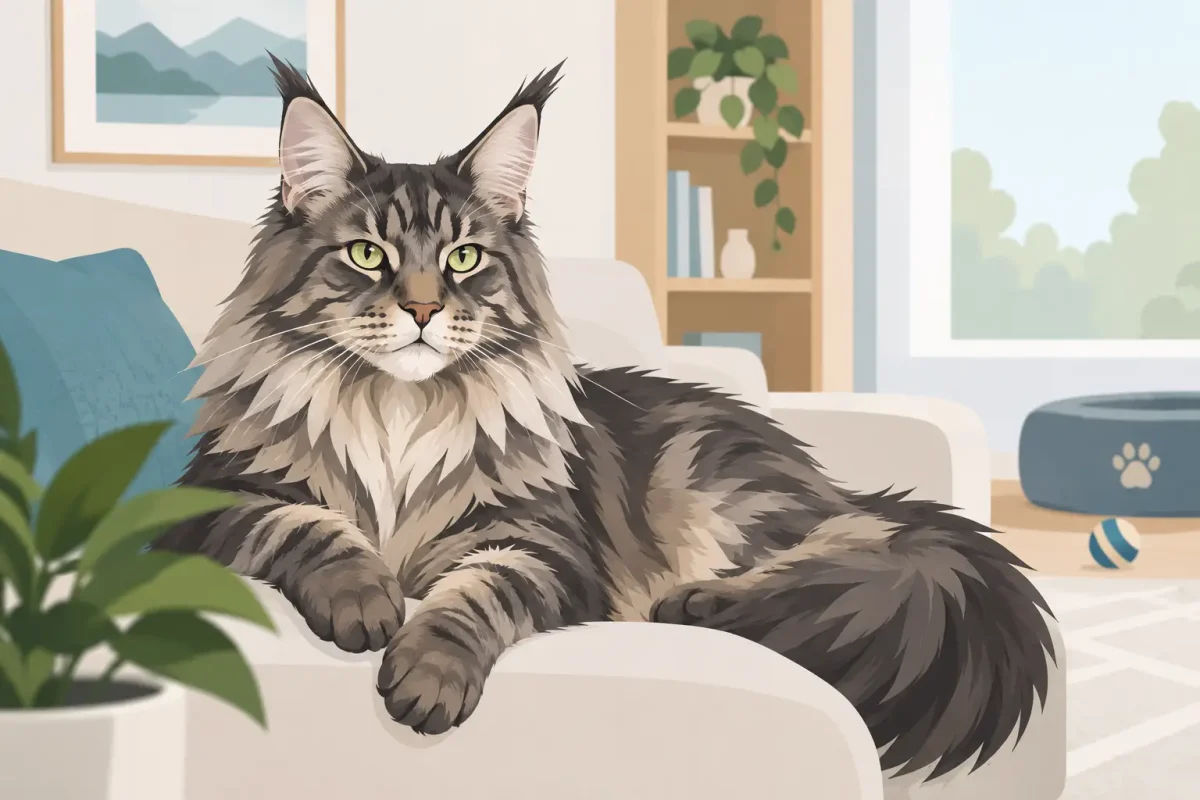
A Maine Coon may look like a little wildcat with tufted ears, a grand tail, and impressive size, but Maine Coon temperament is often what wins families over for life. Many are affectionate, social, playful companions with a calm, steady presence. Still, the right match is about more than choosing a beautiful kitten. It means understanding how that kitten is likely to share your home, your routines, and your attention over many years.
What Is Maine Coon Temperament Like?
Maine Coons are widely loved for being friendly without being overly demanding. They often want to be near their people, whether that means following you from room to room, sitting beside your desk while you work, or greeting you at the door. They are sometimes called gentle giants, and while every cat is an individual, the phrase captures the breed’s usual combination of size, confidence, and soft-hearted companionship.
Many Maine Coons enjoy affection on their own terms. A cat may settle against your leg on the couch, sleep at the foot of the bed, or offer cheerful head bumps during the morning routine. Some become dedicated lap cats, while others prefer to stay close rather than be held for long periods. This is one reason personal kitten matching matters. Affection can look different from one kitten to the next, even within the same litter.
Their sociable nature also tends to show up in conversation. Maine Coons are known for chirps, trills, and soft little sounds that can feel like a running commentary on the household. They are not necessarily loud cats, but many are delightfully expressive.
A Playful, Curious Cat With a Steady Side
Maine Coons usually keep a playful spirit well beyond kittenhood. They enjoy chasing wand toys, batting small balls across the floor, climbing sturdy cat furniture, and investigating whatever their people are doing. A Maine Coon who carries a toy around the house or drops one at your feet is not being difficult. They are often asking for shared play and connection.
This playful side does not mean the breed is constantly frantic. Compared with some highly active breeds, many Maine Coons have an easiergoing rhythm. They may have lively bursts of energy, then stretch out nearby while the family relaxes. The balance can work especially well for households that want an interactive cat but do not want every day to feel like a full-time game of chase.
That said, a large, intelligent cat needs an outlet. A bored Maine Coon may invent entertainment by opening cabinets, climbing places you hoped were out of reach, or turning household objects into toys. Daily interactive play, scratching areas, window views, safe climbing options, and a rotation of toys help keep their bright minds content.
Their Intelligence Shows in Everyday Life
Maine Coons often learn routines quickly. They may recognize the sound of the food cabinet, wait near the door before you return home, or figure out how a favorite toy works after only a few tries. Some enjoy treat puzzles or simple training with positive reinforcement. Teaching a kitten to come when called, step into a carrier comfortably, or use a scratching post can become part of a happy daily routine.
Intelligence is a gift, but it also asks something of the family. Consistency matters. If a kitten is allowed on the kitchen counter sometimes but corrected other times, the rule will be confusing. Gentle redirection and an appealing alternative, such as a tall cat tree nearby, usually work better than punishment.
Are Maine Coons Good With Children and Other Pets?
A well-socialized Maine Coon can be a lovely fit for many family homes. Their generally patient, people-oriented nature may make them a strong choice for respectful children, especially when adults help children learn how to interact kindly. Young children should be taught not to pull a tail, chase a resting kitten, or pick up a cat who wants to get down. Even the most patient cat deserves a safe, quiet place to retreat.
With dogs and other cats, the answer depends on personality, early experiences, and introductions. Maine Coons are often adaptable and may enjoy a feline companion or coexist peacefully with a cat-friendly dog. But a friendly breed is not a guarantee that every individual cat will want an instant best friend. Slow introductions, separate resources, and careful supervision create a far better start than placing animals together and hoping they sort it out.
For multi-pet homes, temperament matching is particularly valuable. A confident, outgoing kitten may suit a friendly resident dog, while a gentler kitten may do better in a quieter home with an older cat. Sharing honest details about your household helps a caring breeder guide you toward the best possible fit.
How Early Care Shapes a Maine Coon’s Personality
Genes matter, but so does the environment in which a kitten begins life. Kittens raised in a home setting and gently exposed to normal household sounds, kind handling, daily routines, and age-appropriate play have important opportunities to build confidence. Thoughtful socialization does not make a kitten identical to every other kitten. It helps them feel secure as they learn that people, sounds, and new experiences can be safe.
At Maine Coon And Ragdoll House, observing each kitten as an individual is part of making a thoughtful match. One kitten may be the first to greet visitors, another may be especially cuddly after play, and another may be calm and observant before joining the activity. Those small details are more useful than making a choice based on coat color alone.
Responsible planned pairings also support the qualities families hope for in a companion: a stable, affectionate nature, sound health, and the ability to adjust to a loving indoor home. No breeder can promise an exact adult personality, because kittens continue developing with their new families. What they can do is raise kittens with care, share what they see honestly, and help buyers choose with realistic expectations.
What a Maine Coon Needs to Feel Secure
Maine Coons are social cats, which means they do best when companionship is part of the plan. This does not mean someone must be home every minute. Many adjust well to working households when they have a predictable routine, enriching surroundings, and meaningful attention before and after the day begins. Remote workers should remember that a social kitten may happily join video calls, walk across keyboards, and request a play break right when a deadline arrives.
A single Maine Coon can thrive with an engaged family. In some homes, a compatible feline companion can also be beneficial, particularly if the household is away for longer stretches. The best choice depends on the kitten’s nature, the resident pets, space, budget, and the family’s ability to provide slow, thoughtful introductions.
Their physical size deserves consideration, too. Maine Coons need a large, stable carrier, generously sized litter boxes, sturdy scratching posts, and cat trees built to support an adult cat. These practical details are not separate from temperament. A cat who can stretch, climb, scratch, play, and rest comfortably is more likely to feel settled in the home.
The First Week Can Set a Gentle Tone
A new kitten may be outgoing from the first hour, or they may need a few quiet days to adjust. Both responses can be completely normal. Begin with one calm room stocked with food, water, a litter box, a bed, toys, and a hiding spot. Let your kitten come forward at their own pace rather than passing them from person to person.
Keep the first days predictable. Offer meals on a consistent schedule, sit nearby during gentle play, and introduce the larger home gradually. If children or pets are part of the household, make introductions short, calm, and positive. Your patient approach tells a kitten that this new place is not only exciting, but safe.
The Maine Coon temperament many families cherish is warm, curious, and deeply companionable, but the happiest outcome comes from a good match and a loving routine. Choose the kitten whose energy and social style fit your real life, then give that well-loved kitten time to show you who they are.
