
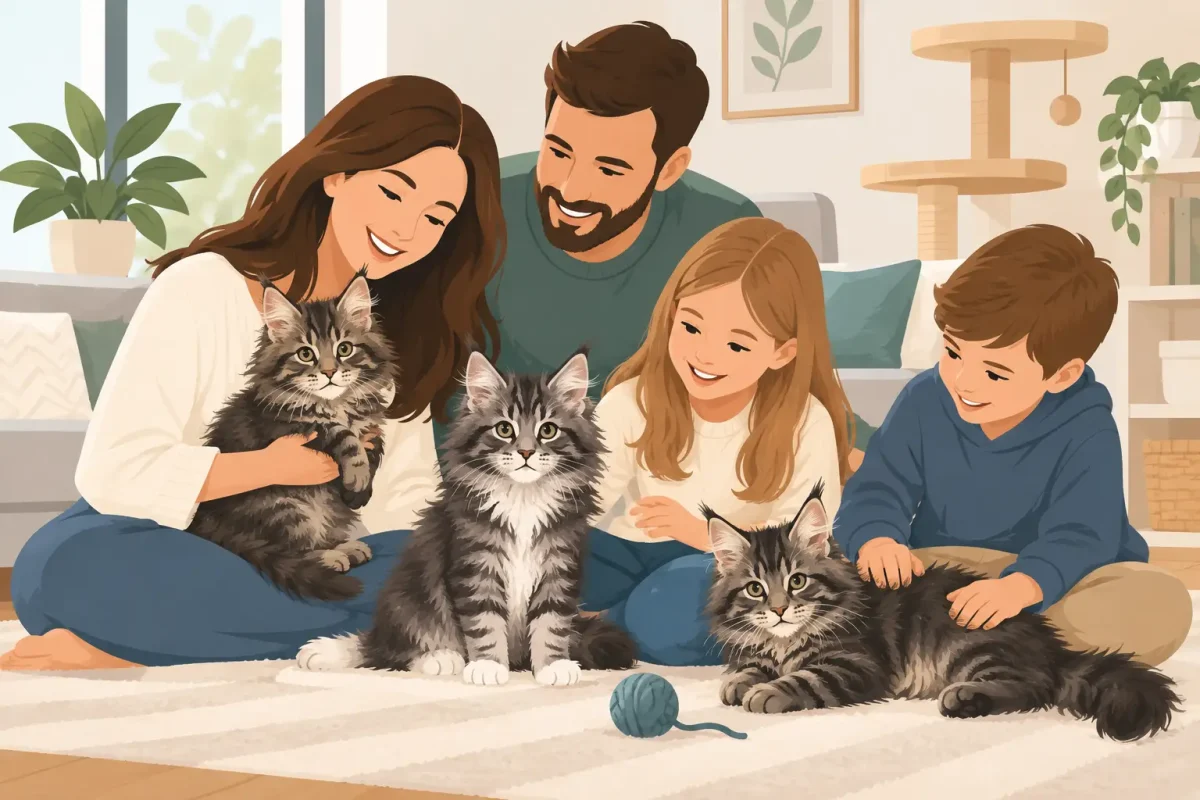
A Maine Coon kitten may arrive looking like a tiny wildcat, complete with oversized paws, tufted ears, and a fluffy tail. Within days, though, most families see the softer side: a curious companion following morning routines, supervising remote work, and settling nearby when the house grows quiet. Maine Coon kittens are memorable for their striking looks, but the best match is built around temperament, daily rhythm, and the kind of relationship your household hopes to share.
What Makes Maine Coon Kittens So Special?
Maine Coons are one of the largest domestic cat breeds, and their presence grows right along with them. Adult size varies by genetics, nutrition, and sex, but families should expect a substantial cat with a long body, broad features, and a beautiful semi-long coat. They mature gradually, so that sweet, lanky kitten stage can last longer than many new owners expect.
Their personalities are often just as appealing as their appearance. A well-raised Maine Coon is commonly affectionate, observant, playful, and social without needing to be held every moment. Many enjoy being involved in family activity. They may greet visitors, trail a favorite person from room to room, or invent games with a toy mouse, a paper bag, or a running faucet.
That said, no two kittens are exactly alike. One may be the confident first one to investigate a new room, while another may be gentle and watchful before joining the fun. Coat color can catch the eye, but a kitten’s comfort level, energy, and people-focused nature are often far more meaningful when choosing a lifelong companion.
Is a Maine Coon the Right Fit for Your Household?
Maine Coons can fit beautifully into many homes, including families with respectful children, couples, remote workers, and established pet households. Their sociable nature can make them especially rewarding for people who want a cat that feels present in daily life rather than distant or overly independent.
A busy home is not automatically a problem. In fact, kittens raised with ordinary household sounds and gentle daily handling are often comfortable with normal activity. The key is thoughtful interaction. Children should learn to let a kitten rest, avoid pulling the tail or fur, and allow the cat to choose when to cuddle. A calm introduction helps everyone build trust from the start.
For homes with dogs or other cats, personality matters on both sides. A friendly kitten may adapt well, but introductions should still happen slowly. Start with separate spaces, scent swapping, and short supervised visits. Rushing a new relationship can create stress, while patient pacing gives each animal time to feel secure.
Maine Coons are indoor companions at heart. Their trusting personalities, size, and eye-catching coats can make unsupervised outdoor time risky. A secure home, sturdy window perches, climbing furniture, and interactive play give them plenty to enjoy safely. Some families also choose a carefully enclosed outdoor space or harness training, but these should be introduced gradually and with safety in mind.
Choosing a Kitten Beyond Color
It is easy to fall in love with a photograph. A dramatic smoke coat, classic tabby pattern, or bright white paws can make a kitten feel like the one before you have even asked a question. Appearance matters to many families, and there is nothing wrong with having a preference. Still, it should be one part of the decision, not the whole decision.
Think first about your household. Are you looking for a confident kitten who will happily participate in an active family routine? Would a gentle, steady companion suit a quieter home? Do you work from home and hope for a cat who enjoys being near you throughout the day? Honest conversations about lifestyle help a breeder guide you toward a kitten whose emerging personality fits naturally.
A responsible breeder spends time observing each kitten as an individual. Daily handling, play, feeding, rest, and interaction with littermates reveal valuable clues over time. At Maine Coon And Ragdoll House, kittens are raised as part of a family home, so their development is observed in the everyday moments that matter to future families.
Ask about a kitten’s socialization, current routine, health information, parent temperament, and how the breeder approaches matching. Clear answers are reassuring. You should also feel comfortable asking practical questions about reservations, waitlists, pickup timing, travel coordination, and what support is available once your kitten comes home.
The Care Maine Coons Need as They Grow
Their coat is one of the Maine Coon’s most beautiful features, and it comes with a real grooming commitment. Many cats do well with regular combing several times a week, while seasonal shedding may call for more frequent sessions. Gentle grooming from kittenhood makes the process feel familiar rather than stressful.
Use a quality comb that can reach through the longer coat without tugging. Focus on areas that can mat more easily, such as behind the ears, under the front legs, along the belly, and around the hindquarters. Short, positive sessions work better than waiting until a tangle becomes uncomfortable. A few treats and a calm voice can turn grooming into welcome one-on-one time.
Nutrition also supports healthy growth, coat condition, and energy. Kittens need food formulated for their life stage and access to fresh water. Your veterinarian can help guide feeding portions as your kitten grows, especially because Maine Coons mature slowly and can have different body needs at different stages.
Play is not optional for a bright, growing kitten. Wand toys, soft balls, tunnels, puzzle feeders, and climbing structures offer healthy outlets for curiosity and energy. Rotate toys occasionally so familiar favorites feel interesting again. End active play with a small meal or treat when possible, which can help mirror a natural hunt-eat-rest rhythm.
Regular veterinary care is another part of thoughtful ownership. Keep scheduled wellness visits, discuss vaccinations and parasite prevention with your veterinarian, and pay attention to changes in appetite, litter box habits, activity, or behavior. A health guarantee and careful breeding practices provide a valuable foundation, while attentive lifelong care helps protect that foundation.
Preparing Your Home Before Pickup Day
The first week does not need to be perfect. It needs to feel safe. Before your kitten arrives, prepare a quiet starter room with food and water placed away from the litter box, a comfortable bed, a scratching surface, toys, and a secure hiding spot. A carrier should stay available too, rather than disappearing after the trip home. Leaving it open with a soft blanket can help it become a familiar resting place.
Begin with a smaller area of the home, especially if you have children or other pets. Your kitten can expand their territory as confidence grows. Let them come forward on their own terms. Sitting quietly on the floor, offering a toy, and speaking softly will do more for trust than repeatedly picking them up.
Try to keep the food and litter routine consistent during the transition. Sudden changes can be hard on a young kitten’s stomach and confidence. If you plan to switch foods or litter, make gradual changes after your kitten has had time to settle in.
The first nights may include extra meowing, especially for a kitten adjusting to a new home without littermates. Comfort, consistency, and patience go a long way. Avoid turning every nighttime sound into a long play session, but offer reassurance and make sure the kitten has everything needed nearby.
A Companion for the Everyday Moments
The joy of living with a Maine Coon is rarely limited to the first day you see that magnificent coat or oversized paws. It shows up later: in the kitten who waits outside the bathroom door, settles beside the family during movie night, or makes an ordinary afternoon feel a little warmer. Give your new companion time, gentle guidance, and a predictable routine, and you create the space for a well-loved kitten to become a confident member of the family.
