
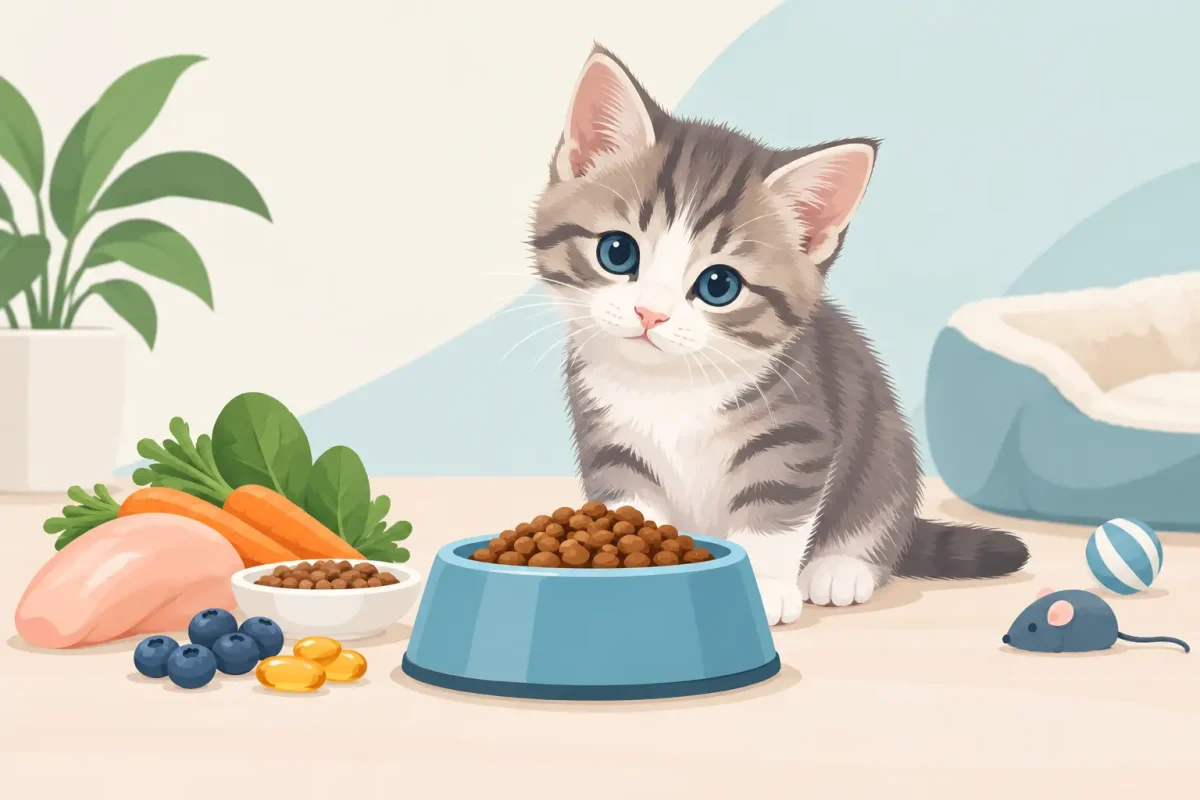
A kitten’s first meals do more than fill a small bowl. They support rapid growth, playful energy, brain development, a healthy coat, and the steady confidence that helps a young cat settle into family life. The best kitten foods are not simply the most expensive bag or the trendiest recipe. They are complete, age-appropriate foods that fit your kitten’s health needs, daily routine, and appetite.
For Maine Coons and Ragdolls, thoughtful nutrition matters from the start. Both breeds grow into substantial, affectionate cats, yet every kitten develops at an individual pace. A gentle feeding routine, a food your kitten enjoys, and guidance from your veterinarian can make the transition into a new home feel calmer for everyone.
What Makes a Food Right for a Growing Kitten?
Kittens need more calories and nutrients per pound than adult cats. Their bodies are building muscle, bone, organs, and a lifelong immune foundation, often while they seem determined to turn every room into a racetrack. A food labeled for kitten growth is formulated with this busy stage in mind.
Look for a statement on the package confirming that the food is complete and balanced for growth, or for all life stages. In the United States, this commonly means the food meets nutritional standards established by AAFCO. That small statement is more meaningful than front-of-bag claims about being premium, natural, grain-free, or breed-specific.
A well-formulated kitten diet should provide quality animal-based protein, adequate fat for energy, and key nutrients such as taurine, DHA, calcium, and phosphorus. Taurine supports heart and eye health, while DHA helps support developing brains and vision. Calcium and phosphorus need to be appropriately balanced for healthy skeletal development. Adding supplements without veterinary advice can disrupt that balance, so a complete kitten food is usually the best foundation.
Best Kitten Foods: Wet, Dry, or Both?
There is no single format that suits every home or kitten. Wet food, dry food, and a thoughtful combination of both can all be appropriate when the recipe is complete and balanced for growth.
Wet kitten food is naturally higher in moisture, which can be helpful because many cats do not drink as much water as people expect. It is also soft, aromatic, and often especially appealing to young kittens or selective eaters. Serving wet food in measured meals gives you a clear view of how much your kitten is eating, which can be reassuring during the first weeks at home.
Dry kitten food is convenient, shelf-stable, and easy to portion. Some families use it for scheduled meals, while others leave carefully measured amounts available between wet-food feedings. Kibble should not be treated as a dental-care replacement, but its convenience can make a consistent routine easier to maintain.
A mixed approach often works beautifully. Wet food can add moisture and variety, while dry food offers a practical option for busy mornings or households with more than one cat. The right balance depends on your kitten’s preference, stool quality, body condition, and your household schedule. Fresh water should always be available, preferably in more than one quiet location.
Read the Label Beyond the Marketing
When comparing foods, turn the bag or can around. The ingredient list can be useful, but it does not tell the whole story by itself. A complete nutritional adequacy statement, the food’s life-stage designation, and your kitten’s response to it matter more than whether one particular ingredient appears first.
As you compare options, consider these practical details:
- AAFCO nutritional adequacy for kitten growth or all life stages
- A reputable manufacturer with clear feeding guidance and quality-control practices
- A recipe your kitten digests comfortably and eats willingly
- A price and format your family can consistently provide
The last point deserves respect. A food that is excellent on paper but difficult to find, outside the household budget, or routinely refused by your kitten may not be the best long-term choice. Consistency is valuable, particularly during the first months of growth.
How Much Should a Kitten Eat?
Young kittens usually do best with several small meals each day. Their stomachs are small, their energy needs are high, and their hunger can seem to return the moment a meal ends. Many kittens under six months thrive with three or four meals daily, although the exact schedule should reflect age, food type, and veterinary guidance.
Start with the feeding guide on the package, then treat it as a starting point rather than a fixed rule. Calorie needs vary with growth rate, activity, metabolism, and whether a kitten is spayed or neutered. A veterinarian can help you assess body condition at regular wellness visits and adjust portions before a kitten becomes underweight or gains too quickly.
Instead of focusing only on the number on the scale, look at the whole kitten. You should see steady growth, bright eyes, normal playful behavior, a soft coat, and stools that are formed without being overly dry. You should be able to feel the ribs with gentle pressure, but they should not be sharply visible. Maine Coon kittens can grow for longer than many other cats, so their feeding plan may need gradual adjustments as they mature.
Treats should stay modest during this stage. A few small, kitten-safe treats can support gentle handling, carrier practice, or a positive grooming routine, but they should not crowd out balanced meals. Avoid cow’s milk, bones, heavily seasoned people food, and raw diets unless they are specifically formulated and discussed with a veterinarian. Kittens are especially vulnerable to nutritional imbalances and foodborne illness.
Changing Foods Without Upsetting Tiny Tummies
A new home already brings new voices, scents, rooms, and routines. Keeping a kitten on the familiar food at first can offer a welcome bit of stability. If you plan to change foods, wait until your kitten is settled and then make the switch gradually over seven to 10 days.
Begin by mixing a small amount of the new food into the familiar food. Increase the new food slowly while watching your kitten’s appetite and litter box habits. If loose stool, vomiting, or a clear loss of appetite develops, slow down the transition and contact your veterinarian if symptoms persist or your kitten seems tired, uncomfortable, or dehydrated.
At Maine Coon And Ragdoll House, we believe transition guidance should be as individual as the kitten. A well-loved kitten arrives with established routines, but a patient family helps those routines become part of a new, secure home.
Feeding Maine Coon and Ragdoll Kittens
Maine Coons are often curious, active, and impressively large as they mature. Their size does not mean they need adult food early. They need a complete kitten diet and regular monitoring so their growth stays steady rather than rushed. Choose a feeding space that feels calm and give them room to eat without a dog or another cat hovering nearby.
Ragdoll kittens are known for their gentle, people-focused nature, but they can still be enthusiastic eaters and playful explorers. A predictable meal routine can become one of the quiet anchors of their day. Because both Maine Coons and Ragdolls have beautiful coats, families sometimes look for foods marketed for skin and fur. A balanced kitten food, good hydration, routine grooming, and veterinary care are usually more useful than chasing specialized claims.
In multi-pet homes, feeding separately can prevent fast eaters from taking a sibling’s meal and helps you notice changes in appetite. This is especially helpful when introducing a new kitten to resident cats. Individual bowls and short, supervised meals give every pet a fair chance to eat peacefully.
When to Ask Your Veterinarian for Help
Call your veterinarian promptly if your kitten refuses food for a day, vomits repeatedly, has ongoing diarrhea, loses weight, appears unusually quiet, or drinks far more or less than usual. Young kittens can become dehydrated quickly. It is also wise to ask for guidance if your kitten has a known health concern, a sensitive stomach, or difficulty maintaining a healthy body condition.
The goal is not to find a perfect food forever on day one. It is to build a dependable routine around nourishing meals, fresh water, gentle observation, and regular veterinary care. When your kitten eats well and feels safe at the bowl, those everyday moments become part of the calm joy of growing up in your family.
