
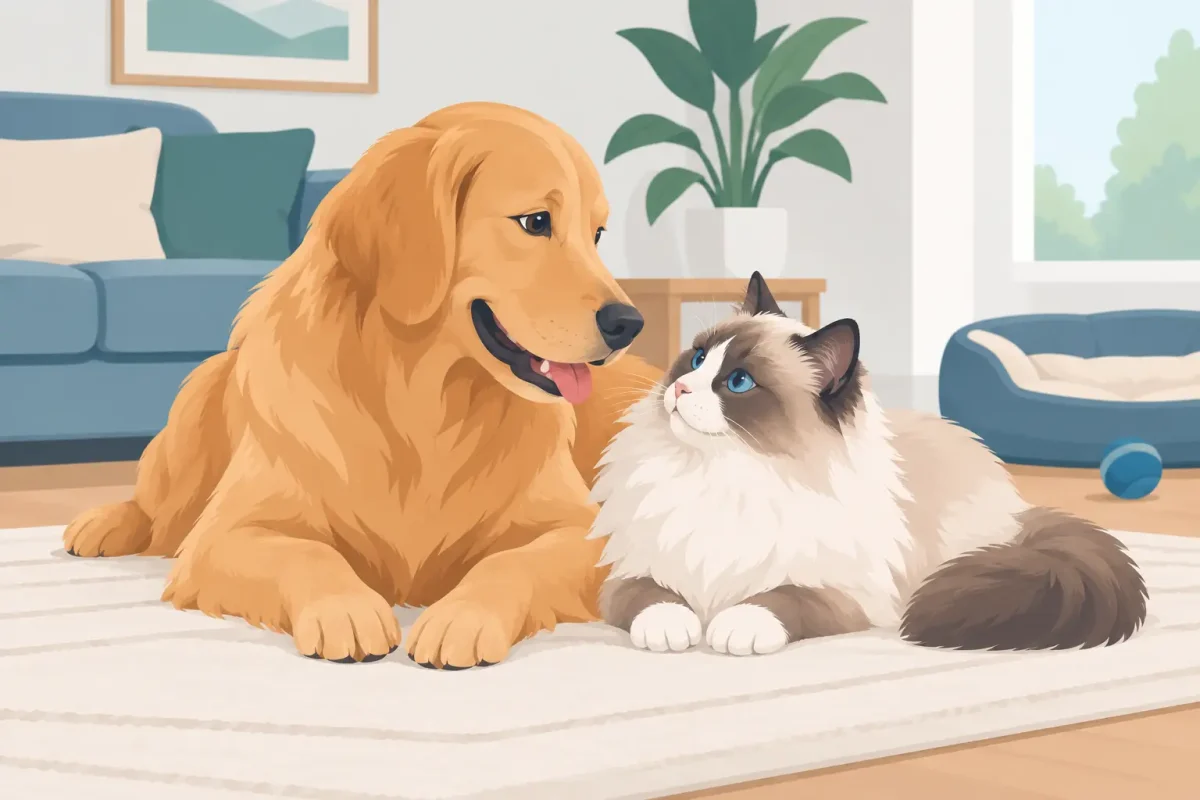
A Ragdoll kitten may be known for soft blue eyes and a wonderfully relaxed way of settling into your arms, but families often have a more practical question before bringing one home: are Ragdolls good with dogs? In many homes, they can be lovely canine companions. Their affectionate, people-oriented nature often helps them adapt well to a respectful dog and the everyday rhythm of family life.
Still, breed temperament is only part of the picture. A calm dog, a thoughtfully socialized kitten, and a patient introduction matter far more than any promise based on breed alone. The goal is not to make two pets become best friends overnight. It is to help each one feel safe enough to share the home at their own pace.
Are Ragdolls Good With Dogs in Most Homes?
Ragdolls are often a strong choice for homes with gentle, cat-savvy dogs. Many are social, trusting, and interested in being close to their people. They usually enjoy following family activity from room to room, which can make the presence of a calm dog feel less alarming than it might to a more reserved cat.
Their easygoing reputation has a limit, though. A relaxed Ragdoll is not a toy, a training tool, or a cat who should be expected to tolerate chasing. Some Ragdolls are immediately curious about a dog. Others prefer to watch from a doorway for several days before deciding that the large, noisy roommate is acceptable. Both responses are normal.
The best match is usually a dog that can settle, respond to cues, and respect a cat’s space. Mature dogs with a history of living peacefully around cats are often easier introductions than excitable puppies. That does not mean a puppy cannot learn. It simply means the adults in the home need to manage the puppy’s enthusiasm carefully while the kitten grows confident.
The dog’s temperament matters more than its size
Families sometimes worry most about large dogs, but size alone does not tell the story. A calm, well-trained large dog may be much easier for a kitten to live with than a small dog that barks, lunges, or fixates on fast movement. Consider how your dog reacts to squirrels, neighborhood cats, visitors, and changes in routine.
A dog with a strong chase instinct or a history of aggression toward cats needs professional, individualized guidance before a kitten is brought home. Love for a particular breed cannot safely outweigh those concerns. A responsible match begins with honesty about the resident dog.
Why Ragdoll Temperament Can Help
Well-raised Ragdolls are often bred and socialized for companionship. They tend to form close bonds, enjoy calm interaction, and respond well to predictable routines. For a family home, those traits can support a smoother adjustment around a polite dog.
Early household exposure helps, too. Kittens raised with everyday sounds, gentle handling, visitors, and normal family activity often arrive better prepared for a new environment. At Maine Coon And Ragdoll House, we see socialization as part of daily care, not a single milestone. A kitten who has been lovingly handled and given steady routines has a stronger foundation for meeting new people, pets, and spaces.
Even so, every kitten is an individual. One may confidently approach the baby gate on day one, while another may need a quiet week before venturing beyond their safe room. Choosing based on personality, energy level, and household needs is wiser than choosing based on color or a single expectation about the breed.
Prepare the Home Before Your Kitten Arrives
Your Ragdoll kitten should begin in a private, peaceful room rather than being introduced to the entire house at once. Set up food, water, a litter box, a soft bed, scratching options, and a few safe toys. This room becomes the kitten’s home base, a place where the dog is not allowed to wander in uninvited.
Give your cat vertical choices as well. A sturdy cat tree, window perch, or shelf lets a kitten observe the dog without feeling cornered. Easy escape routes matter. Never rely on a kitten to stand its ground if the dog becomes too interested.
It also helps to refresh your dog’s basic cues before the kitten comes home. A reliable sit, stay, leave it, and place cue can make introductions much calmer. Practice these skills when nothing exciting is happening, using positive rewards. When the kitten arrives, your dog will already understand what a quiet, successful interaction looks like.
Keep feeding areas separate from the start. Dogs should not have access to cat food or the litter box, and kittens should be able to eat without being watched. These simple boundaries prevent many unnecessary conflicts.
How to Introduce a Ragdoll Kitten to a Dog
Start with scent, not face-to-face contact. Exchange bedding or gently rub each pet with a clean cloth and place it near the other animal’s resting area. This allows both pets to learn that the other’s scent belongs in the home without the pressure of a direct meeting.
After a day or two, allow them to see one another through a secure baby gate, cracked door, or another barrier that prevents contact. Keep these first sessions short and quiet. Your dog should be on leash, and your kitten should always have room to move away. Offer calm praise and treats when the dog looks at the kitten and then redirects attention back to you.
When both animals are relaxed at the barrier, you can try brief, supervised time in the same room. Keep the dog leashed at first. Let the kitten choose whether to approach. Do not carry the kitten over to the dog, and do not force nose-to-nose greetings. A cat that walks away is communicating clearly and should be allowed to do so.
It is normal for a kitten to hiss once or twice during early meetings. A hiss is not a failure. It is a request for distance. The right response is to calmly create more space and shorten the next session. Likewise, a dog that becomes overly focused, stiff, whiny, or unable to respond to cues needs a break from the interaction.
Progress should be measured in comfort, not speed. Some pets settle into a quiet friendship within a few days. Others need several weeks of structured introductions before they can share a room comfortably. Keep all interactions supervised until you have seen consistent, relaxed behavior over time.
Signs the Match Is Moving in the Right Direction
Peaceful coexistence often looks ordinary. Your dog may sniff the kitten briefly and then lie down. Your Ragdoll may walk through the room, use the scratching post, eat, or nap while the dog is nearby. They do not need to play together to be doing well.
As trust grows, you may see gentle curiosity, relaxed body language, and shared time near family members. Some Ragdolls eventually choose to sleep beside the dog or follow them through the house. Others prefer friendly distance. Let their relationship be their own.
Watch for signs that either pet is under too much pressure. Persistent hiding, skipped meals, litter box changes, flattened ears, growling, stalking, repeated barking, or attempts to chase should prompt you to slow down. Return to barriers and shorter sessions rather than hoping the pets will work it out alone.
Common Mistakes Families Can Avoid
The most common mistake is giving a new kitten too much freedom too quickly. A full house can feel enormous and unpredictable, especially with a curious dog nearby. Starting small gives your kitten confidence and lets you control the pace.
Another mistake is allowing chase behavior because it appears playful. Even a playful chase can frighten a kitten and create a pattern that is difficult to undo. Interrupt it immediately, redirect your dog to a cue or activity, and make the environment easier to manage with gates, leashes, and separate spaces.
Avoid punishing either pet for fear-based behavior. Scolding a kitten for hissing or a dog for looking uncertain can add stress to an already new situation. Calm management, distance, and rewards for relaxed choices teach much more effectively.
Choosing the Right Ragdoll for a Dog Household
When you are speaking with a breeder, describe your dog honestly. Share the dog’s age, size, energy level, training, and previous experience with cats. Mention whether there are children, other pets, or a busy work-from-home schedule. These details help guide a thoughtful kitten match.
A family with a gentle senior dog may be ready for a more playful, outgoing kitten. A home with a young, energetic dog may benefit from a confident kitten and a slower transition plan. Health history and responsible breeding matter, but so does the daily fit between a kitten’s developing personality and the life waiting for them.
A Ragdoll and a dog can bring a special kind of calm joy to a home when both are given time, guidance, and their own safe space. Start slowly, notice the small signs of growing trust, and let your well-loved kitten set the pace for a relationship that may become one of the sweetest parts of family life.
