
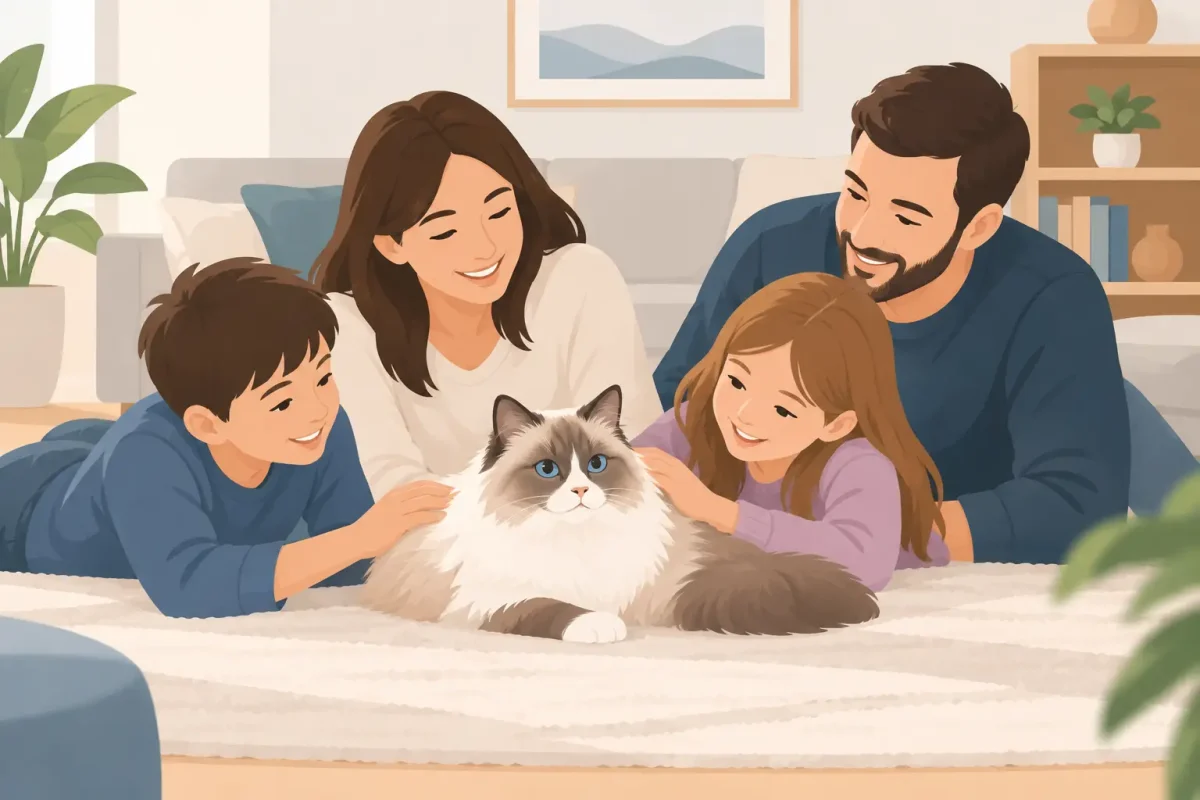
A Ragdoll often chooses the busiest spot in the house, not because they need to be the center of attention, but because they want to be near their people. That desire for gentle companionship is at the heart of the Ragdoll cat temperament. These cats are widely loved for their soft, affectionate nature, quiet confidence, and ability to bring calm joy to a home.
For families, couples, remote workers, and first-time pedigree-cat owners, a Ragdoll can be a wonderful fit. Still, the right match is about more than a beautiful blue-eyed face or a silky coat. Understanding how a Ragdoll relates to people, play, routines, and other pets helps you decide whether this loving breed fits the life you share every day.
What Is the Typical Ragdoll Cat Temperament?
Ragdolls are often described as gentle, people-oriented, and easygoing. Many enjoy following a favorite person from room to room, settling beside them on the sofa, or greeting them at the door after a long day. They tend to form close bonds without demanding constant activity or creating a great deal of household noise.
Their affection is usually steady rather than overwhelming. A Ragdoll may rest at your feet while you work, supervise dinner preparation from a nearby chair, or sleep beside you at night. Some are enthusiastic lap cats, while others prefer to stay close enough for a hand on their back. Both can be deeply loving expressions of the breed’s social nature.
The breed’s calm reputation does not mean every Ragdoll has the same personality. One kitten may be bold and playful from the start, while another may be more observant and take a few days to feel fully at home. Planned pairings, early handling, home exposure, and each kitten’s individual character all shape how that personality appears.
The “floppy” reputation has limits
Ragdolls earned their name because some relax noticeably when held. It is an endearing trait, but it should never be treated as a promise that every Ragdoll wants to be carried or cuddled on demand. Even the most affectionate kitten deserves to choose when and how they are held.
Children should be taught to sit down before holding a kitten, support the body with both hands, and let the cat leave when they are ready. Respectful handling builds trust and gives a gentle Ragdoll the security to become even more affectionate over time.
Why Ragdolls Often Fit Family Homes
A well-socialized Ragdoll is often comfortable with the ordinary rhythm of family life: conversation, television, cooking, visitors, children moving through the house, and the regular sounds of a home. When kittens are raised with thoughtful daily handling and appropriate household exposure, those experiences can help them approach new situations with more confidence.
Their patient, people-loving nature can make them especially appealing for families with respectful children. Ragdolls are generally less interested in rough-and-tumble play than some more athletic, high-drive breeds, but they still enjoy interactive games, wand toys, soft balls, and a good chase down the hallway. They are companions first, yet they need play and enrichment to stay happy.
For remote workers, a Ragdoll can be a particularly sweet presence. Many are content to keep you company during the workday, checking in between naps and play sessions. They do not need to be entertained every minute, but they do appreciate conversation, gentle attention, and a predictable routine.
Ragdolls and Other Pets
Many Ragdolls adapt beautifully to homes with another friendly cat or a cat-savvy dog. Their relaxed manner can support peaceful relationships, especially when introductions are slow and each pet has space to adjust. A calm Ragdoll may be curious about a dog, but curiosity should never be mistaken for immediate comfort.
Start with separate spaces, exchange bedding so pets can become familiar with each other’s scent, and allow short, supervised visits. Keep feeding areas, litter boxes, resting spots, and high perches available in more than one location. A kitten should not have to compete for every resource in a new home.
Temperament on both sides matters. A gentle Ragdoll may not enjoy a dog that chases, barks close to their face, or ignores feline boundaries. Likewise, an established cat may need more time to accept a playful newcomer. Honest conversations about the personalities already in the home are one of the best ways to choose a kitten with a suitable adjustment style.
Affectionate Does Not Mean Independent
Ragdolls are social cats, and many do best when they have meaningful daily interaction. That does not mean someone must be home all day. A household with regular work or school schedules can still be a wonderful setting, provided the cat receives play, affection, and connection before and after those hours.
A solo Ragdoll may thrive with an attentive family that enjoys engaging with their cat. In a busier household where everyone is away for long stretches, a compatible feline companion can sometimes be helpful. It depends on the individual kitten, the resident pet’s personality, and the home setup. Two cats are not automatically easier, but the right pair can offer companionship and play.
When bringing home a kitten, begin with a smaller, quiet area rather than opening the whole house at once. Provide a cozy bed, food and water placed away from the litter box, scratching options, toys, and a safe place to retreat. A confident kitten may explore quickly; a more reserved one may need a little extra time. Letting them set the pace creates a stronger start than trying to rush the adjustment.
The Playful Side of a Calm Breed
Ragdolls have a peaceful presence, but they are not decorative cats. Kittens are energetic, curious, and often delightfully silly. Adults still need opportunities to stalk, chase, climb, and solve small puzzles. A few short interactive play sessions each day can strengthen your bond while giving natural hunting instincts a healthy outlet.
Many Ragdolls enjoy games of fetch, especially with lightweight toys they can carry. They may also learn household routines quickly, including when meals are served or when a favorite person usually settles in for the evening. Their intelligence is often quiet and observant rather than showy.
Because Ragdolls can be trusting and may not have strong street instincts, they are best suited to life indoors. A secure catio or carefully managed harness time can provide fresh air and new sights for cats that enjoy it, but outdoor access should always be safe and supervised. Indoor life also protects their gentle nature from traffic, predators, parasites, and encounters with unfamiliar animals.
Choosing a Ragdoll Kitten by Personality
Color, pattern, and eye color may catch your attention first, but temperament should guide the final decision. A family with young children may be looking for a kitten that recovers quickly after a new experience and enjoys regular engagement. A quieter couple may prefer a softer, more observant kitten that will blossom in a peaceful home. A home with a dog may need a kitten that has shown curiosity and confidence around appropriate household activity.
No responsible breeder can promise an exact adult personality. What they can do is spend time with each kitten, observe how they respond to handling and play, understand the parents’ temperaments, and communicate honestly about what they see. At Maine Coon And Ragdoll House, that individual attention is part of helping families look beyond appearance and toward the companion that feels right for their home.
Ask practical questions when you are considering a kitten. How does the kitten respond to being picked up? Do they seek people out after play? Have they been exposed to normal home sounds? Are they more adventurous or more likely to watch first? Clear answers help create a thoughtful match and set realistic expectations for the first few weeks.
Helping a Ragdoll Feel Secure for Life
The most affectionate Ragdolls usually flourish where affection is paired with consistency. Keep meals and litter care dependable, offer daily play, provide scratching surfaces and high resting places, and handle grooming as a calm bonding routine. Their semi-long coat benefits from regular combing, especially around the chest, underarms, belly, and hindquarters where tangles can form.
Most of all, pay attention to the cat in front of you. A Ragdoll who follows you everywhere may want more interaction. One who slips away during a busy gathering may simply need a quiet room and time to reset. Meeting those small signals with patience is how a well-loved kitten grows into the relaxed, devoted companion families hope for.
A Ragdoll brings a gentle heart into a home, but the best relationships are built through everyday kindness: a familiar routine, a few playful minutes, a soft place to rest, and people who make room for them to belong.
