
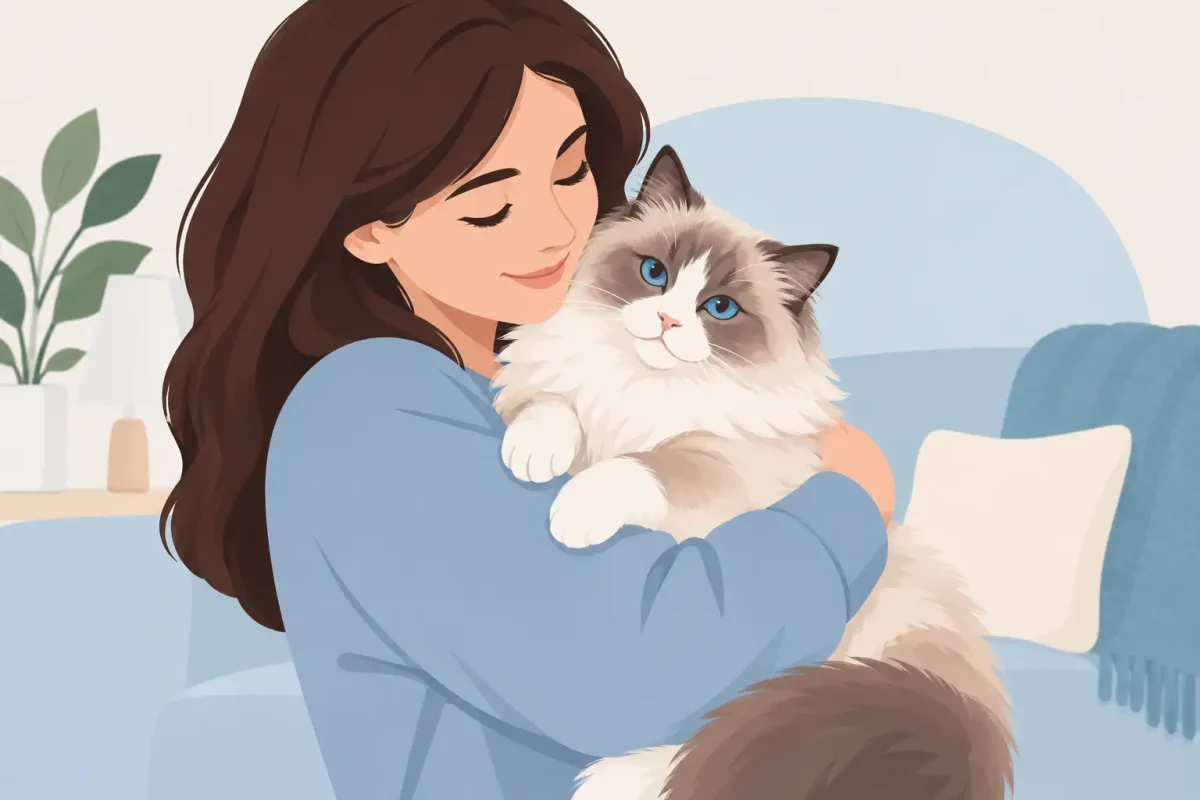
A Ragdoll may melt into your arms with the relaxed, floppy posture that helped inspire the breed’s name. That sweet picture is real for many families, but do Ragdolls enjoy being held every time, by every person, and for every length of time? Not necessarily. Ragdolls are often deeply people-oriented and affectionate, yet each kitten grows into an individual cat with personal boundaries.
For a family choosing a companion, that distinction matters. A well-loved Ragdoll can be wonderfully close, content to follow you from room to room, settle beside you during a workday, and seek out a warm lap at night. Being carried, however, asks a cat to give up control of where they stand and when they leave. The happiest cuddles happen when a Ragdoll feels safe, supported, and free to say “all done.”
Do Ragdolls Enjoy Being Held More Than Other Cats?
Ragdolls have a well-earned reputation for gentle, affectionate temperaments. Many enjoy physical closeness and tolerate or actively seek being picked up more readily than some more independent breeds. They are commonly described as soft-natured companion cats, which can make them a lovely fit for families, couples, and remote workers who want a cat that enjoys shared daily life.
Still, breed tendencies are not guarantees. One Ragdoll may happily rest against your chest for several minutes. Another may prefer a lap, a shoulder-height perch, or sitting beside you with one paw touching your leg. Both can be secure, loving cats.
A kitten’s early experience also shapes how comfortable they are with handling. Kittens raised in a home environment, with gentle daily interaction and exposure to normal household sounds and routines, have a strong foundation for feeling at ease with people. That foundation should be respected as they grow. Calm handling builds trust; repeatedly holding a cat who is trying to leave can weaken it.
The “Floppy” Ragdoll Myth, Gently Corrected
The name Ragdoll came from the relaxed way some cats soften in a person’s arms. It does not mean a Ragdoll should be expected to go limp, accept any kind of handling, or enjoy being passed around at gatherings.
Even an easygoing Ragdoll can have preferences. Some like to be held only when they approach first. Some enjoy a brief lift but become uncomfortable if held upright like a baby. Others may be extra cuddly in quiet evenings and less interested when there is active play, a meal, or a new visitor competing for their attention.
A cat’s mood can change, too. A growing kitten may become more wiggly as confidence and curiosity increase. An adult who normally loves being picked up may be less comfortable during a stressful move, after a grooming session, or when a sore joint or tummy upset makes handling unpleasant. Affection is not measured by how long a cat stays in your arms.
Signs Your Ragdoll Is Comfortable
Look at the whole cat, not just whether they remain still. A relaxed Ragdoll often has loose muscles, a soft expression, ears facing forward or gently to the side, and a quiet tail. They may purr, knead, lean into you, or settle their head against your shoulder.
Signs that the moment should end include a stiff body, tail flicking, ears turning back, wide pupils, squirming, pushing away with the paws, or a low growl. Some polite cats do not struggle much at first. They may simply look toward the floor or repeatedly shift their weight. Putting them down before they feel trapped teaches them that being picked up is safe.
How to Hold a Ragdoll Comfortably
Ragdolls can become substantial cats, especially males, so good support matters from kittenhood onward. Never lift a cat by the front legs, scruff, or belly alone. Instead, use one hand beneath the chest, just behind the front legs, and the other beneath the hindquarters. Keep your cat close to your body so they feel steady rather than suspended.
Most cats prefer a horizontal, cradled position with all four paws supported. A Ragdoll who enjoys a shoulder cuddle may rest with their chest against you and their back end fully supported by your arm. Let their body guide you. If they stretch their legs toward the floor, they are usually asking to be set down.
Keep early holding sessions brief and pleasant. Pick up your kitten for a few calm seconds, speak softly, then place them down while they are still relaxed. Over time, many kittens learn that being held is predictable and comfortable. A treat, a favorite gentle pet, or a calm return to play can create a positive association without making handling feel like a test.
Avoid picking up a sleeping cat suddenly or reaching over them from above. These gestures can feel startling, even in a friendly home. Invite contact first, approach at their level, and give them a moment to recognize you.
Helping Children Build a Gentle Relationship
Ragdolls can be patient companions in family homes, but children should be taught that a cat is not a stuffed animal. The best rule is simple: sit down before holding the kitten, support the whole body, and let the cat leave whenever they choose.
For younger children, it is often safer to let the kitten come sit beside them rather than asking them to carry the kitten across a room. An adult can help with short, supported cuddles, especially while a kitten is small. As your Ragdoll matures and becomes heavier, floor-level affection, brushing, wand play, and lap time are often more comfortable for everyone.
Teach children to notice the early signs of “no thank you.” When a child sees that putting a cat down gently earns more future cuddles, they learn a lesson in kindness that benefits both pet and family.
Why Some Ragdolls Prefer Laps Over Being Carried
Many people picture an affectionate cat as one that wants to be held constantly. But cats show closeness in different ways. A Ragdoll who trails you into the kitchen, sleeps at the end of your bed, chirps when you come home, or settles beside your keyboard is choosing connection.
Lap time gives a cat more control than being carried. They can shift positions, stretch, and leave when they want to explore. For some Ragdolls, that freedom makes them even more likely to seek physical contact. Respecting a preference for lap cuddles can lead to a warmer relationship than insisting on arm cuddles.
The same applies to a new home. During the first days after arrival, even a naturally affectionate kitten may need time to watch, sniff, eat, and learn the household routine. Offer quiet companionship rather than expecting immediate cuddling. When a kitten feels secure, their natural personality has room to shine.
When a Change in Handling Tolerance Deserves Attention
If a Ragdoll who usually enjoys being held suddenly cries, bites, hides, or pulls away, pause before assuming they have become less affectionate. Discomfort can make lifting unpleasant. Changes in mobility, appetite, litter box habits, grooming, or energy level are useful details to share with your veterinarian.
It is also wise to consider what changed around the cat. A new dog, visiting relatives, loud construction, a different schedule, or a recent trip can all affect a sensitive cat’s desire for close handling. Give them quiet spaces and a steady routine while they readjust.
At Maine Coon And Ragdoll House, we encourage families to look beyond a single personality label when choosing a kitten. A gentle, people-loving Ragdoll may be a wonderful companion, but the best match considers the household’s activity level, children, other pets, and the kind of affection you hope to share.
The loveliest answer to whether your Ragdoll enjoys being held is one you learn together. Support their body, listen to their signals, and let every cuddle end on a calm, happy note. A cat who knows their boundaries will be honored is often the cat most willing to come close again.
