
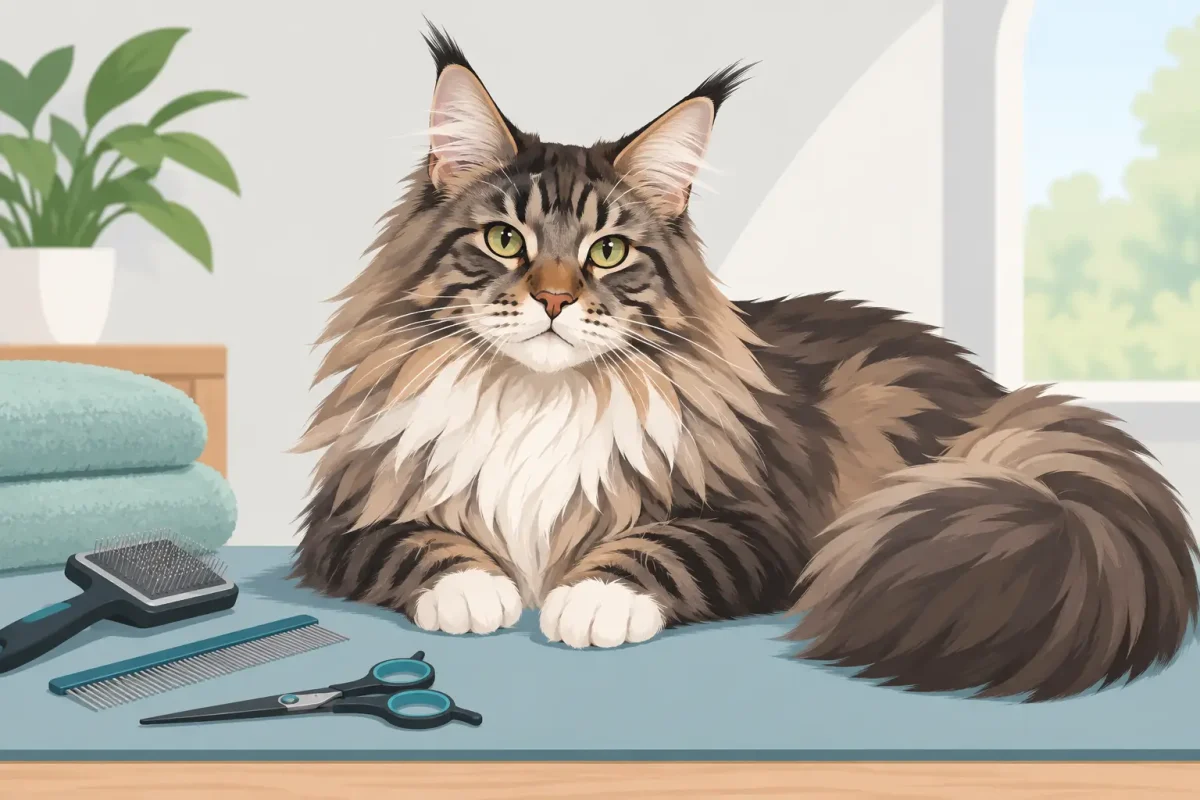
A Maine Coon’s impressive coat is part of the breed’s charm, but Maine Coon grooming is about much more than keeping that beautiful ruff photo-ready. Regular, gentle care helps prevent painful mats, reduces shedding around the house, and gives you a quiet chance to notice changes in your cat’s skin, ears, teeth, or overall comfort.
The good news is that most Maine Coons do not need a complicated salon-style routine. They need consistency, the right tools, and a family who treats grooming as a normal, reassuring part of life together. Starting early makes a meaningful difference. A kitten who learns that brushing comes with a calm voice, patient hands, and a few treats is more likely to become an adult cat who accepts care with confidence.
Why Maine Coons Need Regular Coat Care
Maine Coons have a long, shaggy, water-resistant double coat. Their texture can vary from one cat to another, even within the same family. Some coats stay remarkably easy to manage with a quick weekly comb-through, while others are softer, denser, or more prone to tangling and need attention several times a week.
The places that usually need the most care are where movement and friction meet: behind the ears, beneath the front legs, along the belly, around the pants, and under the collar area if your cat wears one. Mats can begin as small knots close to the skin, where they may be easy to miss under all that fluff. Left alone, they tighten and pull, making brushing unpleasant for even the most easygoing cat.
A routine is also a practical health check. While you groom, you can look for dandruff, redness, fleas, ticks, tender spots, or a sudden change in shedding. If something feels different, a veterinarian can help you decide what comes next.
A Comfortable Maine Coon Grooming Routine
For many families, two or three short brushing sessions each week work better than one long session. Five to ten calm minutes after dinner or while your cat relaxes beside you can be enough. During spring and fall shedding seasons, daily brushing may be helpful, especially for indoor cats who leave soft tumbleweeds of fur under the furniture.
Begin with a wide-tooth metal comb. Work in small sections, starting at the neck and moving along the sides, chest, and tail. Comb in the direction the coat naturally lies, then gently lift the longer fur to check closer to the skin. A soft slicker brush can help remove loose fur afterward, but it should be used lightly. Brushing too firmly or too often with a slicker can irritate sensitive skin.
Save the belly, armpits, and hindquarters for when your cat is already relaxed. If your Maine Coon becomes wiggly or says “enough” by walking away, let the session end on a positive note. Grooming is not a test of obedience. A short, successful session builds more trust than insisting on finishing every inch.
For a young kitten, begin with a few strokes and a reward. Let them sniff the comb first. Touch their paws, ears, and tail gently on separate occasions so handling becomes familiar. This patient foundation is one reason home-raised, well-loved kittens often settle more easily into household routines.
The Tools That Earn Their Place
You do not need a drawer full of grooming supplies. A stainless-steel comb with both wide and narrow spacing is the most useful everyday tool because it can find small tangles that a brush may glide over. A soft slicker brush is helpful for loose coat, and a small pair of cat-safe nail clippers covers routine paw care.
A dematting comb can be useful for experienced owners, but it must be handled carefully. Its blades can cut fur and may nick skin if used too close to a tight mat. Never pull hard on a knot or use scissors near your cat’s skin. Cat skin is thin and can be drawn up into a mat without being obvious. If a tangle is dense, close to the skin, or upsetting your cat, a professional groomer or veterinary team is the safer choice.
Handling Mats Before They Become a Problem
Small tangles are easiest to manage when caught early. Hold the fur near the skin with one hand so there is less pulling, then use the end of a comb to gently tease the outer edge of the knot apart. A little cornstarch-free pet detangling spray can help in some cases, although many light tangles can be worked out slowly without it.
If your cat has several mats, resist the urge to tackle them all at once. Work on one small area, offer praise or a treat, and return later. A Maine Coon who stays relaxed will be easier to groom throughout life than one who learns to dread the sight of a comb.
Frequent matting can also signal that the routine needs adjusting. Older cats may struggle to reach their backs or hindquarters. Cats carrying extra weight may have trouble grooming themselves fully. A sudden decline in self-grooming, greasy fur, or repeated mats deserves a conversation with your veterinarian.
Baths: Occasionally Helpful, Rarely Necessary
Most Maine Coons do not require frequent baths. Their coats are designed to shed dirt well, and overbathing can dry the skin or make the coat feel less natural. A bath may make sense if your cat gets into something messy, develops an oily coat, has a veterinarian-recommended skin-care plan, or needs help during a heavy shed.
When a bath is needed, use lukewarm water and shampoo made specifically for cats. Prepare towels, shampoo, and a non-slip surface before bringing your cat into the bathroom. Keep the experience calm and efficient. Avoid getting water directly in the ears or face, rinse thoroughly, and towel-dry as much as possible.
Some Maine Coons tolerate water with surprising good humor, but that does not mean every Maine Coon enjoys bathing. Your cat’s comfort matters more than a perfect finish. For a generally clean cat, thorough combing is usually the better choice.
Nails, Ears, Teeth, and the Finishing Details
Coat care works best alongside simple whole-cat grooming. Check nails every two to four weeks. Indoor cats may still need trims, particularly if their nails catch on blankets or you hear clicking on hard floors. Trim only the sharp curved tip, staying well clear of the pink quick inside the nail.
Ears should look clean and have no strong odor. A small amount of wax can be normal, but dark debris, redness, frequent head shaking, or scratching should be checked by a veterinarian. Avoid cotton swabs deep in the ear canal. Dental care is equally worth building into the routine. Cat-safe brushing, dental products recommended by your veterinarian, and regular wellness exams all support long-term comfort.
Pay attention to the area around the rear end as well, especially in long-coated cats. A sanitary trim from a professional groomer can be a practical option for cats with very full pants, recurring litter-box messes, or mobility challenges. It is not necessary for every Maine Coon, but it can make daily life cleaner and more comfortable for some households.
When Professional Grooming Is the Kindest Choice
Professional grooming is not a failure of at-home care. It can be a thoughtful option for a severely matted coat, a cat who needs a sanitary trim, an owner recovering from an injury, or a family still learning what their individual cat needs. Look for a groomer experienced with cats and willing to work at your cat’s pace.
For extensive matting, shaving may be kinder than prolonged combing. The goal is not to preserve every inch of fur at the expense of comfort. A coat grows back. Trust and relief matter more.
At Maine Coon And Ragdoll House, we encourage new families to make grooming part of their kitten’s steady home routine from the beginning. A few peaceful minutes of care each week can become one of those small family rituals that says, in the clearest possible way, you are safe, you are cared for, and you belong here.
